Kashmiri Chilli Powder vs Red Chilli Powder: Which Is Best for Indian Cooking
Share
Ever cooked a curry that looked gloriously red in a photo but nearly took someone's head off at the table? That gap, deep colour on one side and raw heat on the other, is what separates Kashmiri chilli powder from regular red chilli powder. Both come from the same plant family. In the kitchen, they do almost opposite jobs. Here's how to tell them apart and pick the right one.
The Quick Answer
Use Kashmiri chilli powder when you want a rich, restaurant-style red colour with barely any heat. Use red chilli powder when you want genuine spice. Kashmiri sits at just 1,000–2,000 Scoville Heat Units (SHU), while regular red chilli powder ranges from roughly 15,000 to 50,000+ SHU depending on the variety. For many Indian dishes, the smartest move is using both.
What is Kashmiri Chilli Powder?
Kashmiri chilli powder is milled from Kashmiri red chillies, a variety grown mainly in Jammu & Kashmir and Himachal Pradesh. It's prized for one thing above all: colour. The powder carries a high ASTA colour value (the lab measure of extractable red pigment), so one teaspoon can turn a pale gravy a deep, glowing crimson.
Flavour-wise it's gentle, mildly smoky, faintly fruity, with a whisper of sweetness. Because real Kashmiri chilli is limited in supply, much of the "Kashmiri" powder on shelves is actually Byadgi chilli from Karnataka, which looks almost identical and shares the same colour-rich, low-heat profile.
Kashmiri chilli uses: butter chicken, rogan josh, tandoori marinades, tikka and biryani, anywhere you want that signature red glow without frightening off the kids.
What is Red Chilli Powder?
Red chilli powder (lal mirch) is the everyday heat-provider. Unlike Kashmiri, it isn't a single variety, it's usually ground from hot chillies like Guntur, Reshampatti or Sannam, so the heat swings a fair bit between brands. Guntur chilli, from Andhra Pradesh's famous chilli belt, commonly lands around 35,000–40,000 SHU.
Its job is sharp, immediate spice. Colour is a bonus, not the point, so expect an orange-red shade rather than the vivid scarlet of Kashmiri.
Red chilli powder uses: Andhra-style curries, sambar and rasam, pickles, spicy stir-fries, and any dish where the heat is the headline.
Kashmiri Chilli vs Red Chilli: The Key Differences
Feature
Kashmiri chilli powder
Red chilli powder
Heat (SHU)
1,000–2,000 (mild)
~15,000–50,000+ (hot)
Colour
Deep, bright scarlet
Orange-red to brown
Flavour
Smoky, mildly sweet
Sharp, pungent
Best for
Colour with little heat
Genuine spice
Typical source
Kashmiri / Byadgi
Guntur / Reshampatti / Sannam
Best Chilli Powder For Indian Cooking: A Simple Framework
Rather than memorising rules, ask three quick questions:
Colour or heat? Colour goes to Kashmiri. Heat goes to red chilli powder.
Who's eating? Kids, elders or spice-shy guests, lean Kashmiri.
Can I use both? Usually yes, which is what most restaurant kitchens do.
For the "both" approach, start with roughly 2 parts Kashmiri to 1 part red chilli powder: Kashmiri carries the colour, the red brings the kick. A butter chicken, for example, gets its photogenic red from Kashmiri, with a pinch of hot powder for backbone.
Can You Substitute One For The Other?
You can, carefully. Swapping regular red chilli powder into a recipe that calls for Kashmiri makes it much spicier and less vibrant, so use about a quarter of the amount. Going the other way, Kashmiri in place of hot powder leaves the dish flat on heat, so add more, or a pinch of something hotter, to compensate.
Buying and Storing
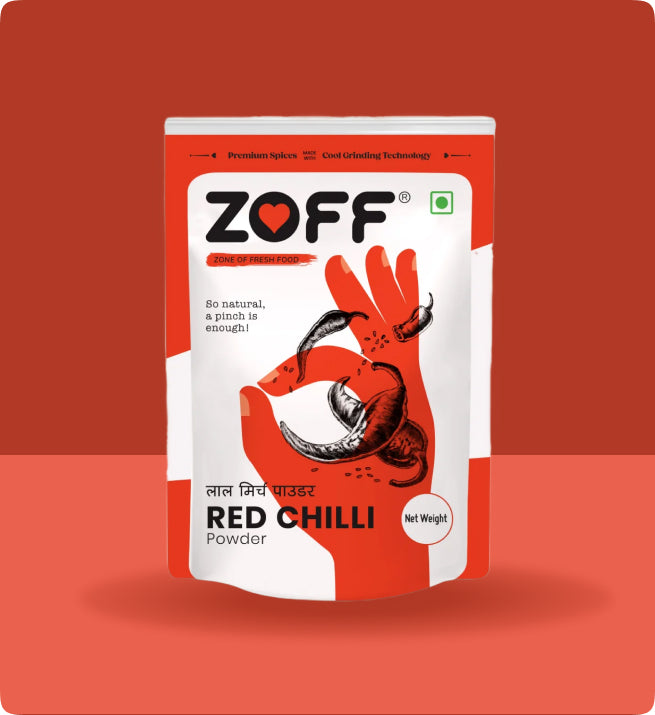
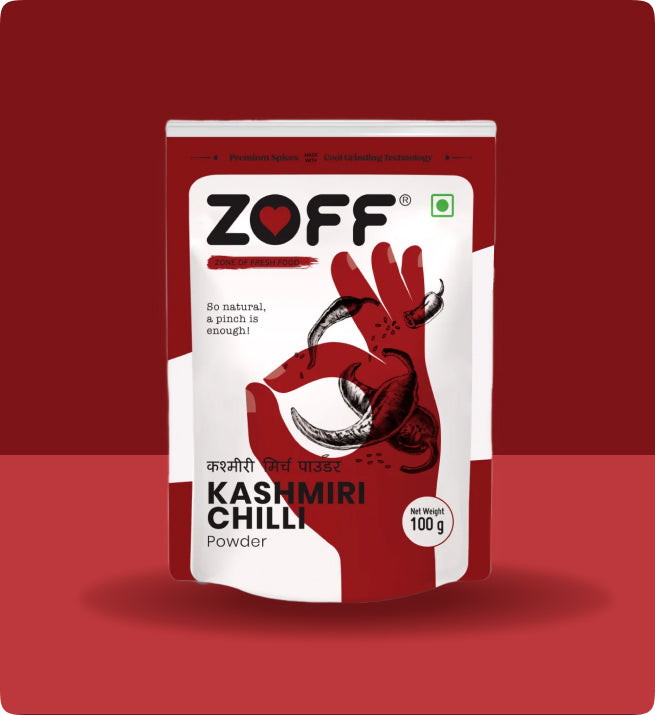
Look for a vibrant, even colour and a fresh aroma; dull, faded powder has usually lost both flavour and pigment. Keep it in an airtight jar away from heat and light. How the chilli is ground matters too. ZOFF uses cool-grinding technology at low temperatures to protect the natural oils, aroma and colour, and offers both a pure Red Chilli Powder for heat and a Kashmiri Chilli Powder for that deep, mild-heat red.
Disclaimer: The information in this blog is for general informational purposes gathered from various sources. Zoff Foods does not guarantee specific health or nutritional outcomes. Please consult a qualified health professional for personalised dietary advice.
Frequently Asked Questions
1. Is Kashmiri chilli powder spicy?
No. At 1,000–2,000 SHU it is one of the mildest chilli powders. It is used mainly for its deep red colour and gentle, smoky flavour rather than for heat.
2. What is the difference between Kashmiri chilli and red chilli?
Kashmiri chilli powder is mild and colour-focused, while regular red chilli powder is much hotter and spice-focused. Kashmiri gives a bright scarlet hue; red chilli powder gives sharper heat and a duller colour.
3. Which chilli powder is best for Indian cooking?
There is no single winner, it depends on the dish. Kashmiri is best for colour with mild heat, like butter chicken and tandoori; red chilli powder is best for everyday spice, like Andhra curries and pickles. Many cooks simply keep both.
4. Can I use Kashmiri chilli powder instead of red chilli powder?
Yes, but the dish will be milder. Kashmiri adds colour, not heat, so increase the quantity or add a hotter chilli if you need real spice.
5. Why is Kashmiri chilli powder so red?
It comes from chillies bred for high pigment, reflected in a high ASTA colour value, which delivers intense red colour with very little heat.
Z
ABOUT THE AUTHOR
ZOFF Foods
ZOFF Foods is built on the belief that great taste starts with great ingredients. With cool grinding technology and a focus on freshness, ZOFF brings authentic Indian flavours to every kitchen.


 Sold out
 Sold out