






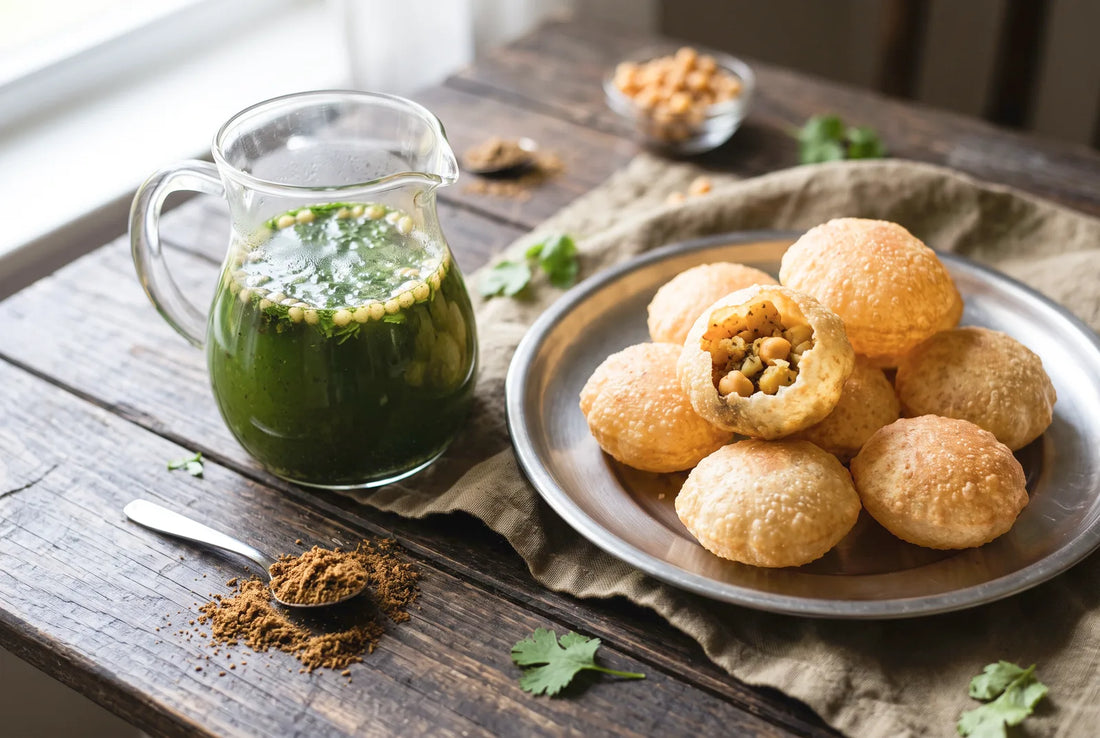
Most of what makes street pani puri taste the way it does comes down to the water, not the puri. The puri is a shell. The filling is potatoes and chickpeas. The pani, the spiced, tangy, cold water that fills each shell, is where the flavour actually lives. What gives that water its flavour is pani puri masala: a spice mix built around black salt, cumin, dried mint, amchur, and chilli that you dissolve in cold water and let sit until everything comes together. Get the masala right, and the rest follows.
What Is Pani Puri Masala?
Pani puri masala is a blended spice mix designed specifically for the spiced water in pani puri. The core ingredients are black salt (kala namak), cumin powder, amchur (dried mango powder), red chilli powder, dried mint, and sometimes dried ginger. Some versions include chaat masala or coriander powder as well.
The masala is dry and goes into the water directly, or gets blended with fresh mint and coriander to make a green pani. It is not the same as chaat masala, though the two share some ingredients. Chaat masala is a finishing sprinkle for salads and snacks; pani puri masala is meant to dissolve in liquid and carry flavour through the water.
How to Make Pani Puri at Home
The three parts of a pani puri are the puri (the crispy shell), the filling, and the pani. Most people buy ready-made puris because making them from scratch is time-consuming, and honestly, store-bought ones work fine if they are fresh and crispy. The pani and the filling are where you should put your effort.
The Puris
If you want to make puris from scratch, the dough is a mix of fine semolina (sooji), a little all-purpose flour, and a little whole wheat flour. A common ratio is 1 cup sooji, a third cup maida, and a third cup atta, with a tablespoon of oil and a quarter teaspoon of baking soda. Knead it into a stiff dough (not soft like roti dough), rest it for 30 minutes, roll thin, cut small circles, and deep fry in hot oil until they puff up and turn golden.
The dough needs to be stiff, the circles thin and even, and the oil properly hot. If the oil is not hot enough, the puris will not puff. This is why most people buy them; the margin for error is small and the quantity you need makes it a project.
The Filling
The standard filling is boiled potatoes mashed roughly, mixed with boiled chickpeas (white or black), finely chopped onion, fresh coriander, and salt. Some recipes add sprouted moong dal or boiled peas. Keep the chunks slightly coarse; a completely smooth filling turns to mush inside the puri.
For a spicier filling, add half a teaspoon of red chilli powder and a pinch of chaat masala directly into the potato-chickpea mix. It means the filling carries flavour on its own instead of relying entirely on the pani.
The Spiced Water (Pani)
This is the part that matters most. There are two types of pani: green (teekha, spicy) and sweet (meetha, made from tamarind and jaggery). Most people at home make just the green one or a combination of both.
For green pani, blend 2 cups of fresh mint leaves with 1 cup of fresh coriander, 1 to 2 green chillies (adjust to your tolerance), and a small piece of ginger with just enough water to get the blender going. Strain if you want a smooth pani, or leave it slightly textured. Add 2 tablespoons of pani puri masala, 2 teaspoons of black salt, 1 tablespoon of lemon juice, and 1 to 2 tablespoons of tamarind pulp. Add about 2 litres of cold water, stir, taste, and adjust.
The pani needs to sit in the fridge for at least an hour before serving. Longer is better. Five or six hours gives a noticeably deeper flavour because the spices have time to infuse into the water. This is the single biggest difference in any pani puri masala recipe: resting time. Homemade pani that tastes like the street version has been sitting; homemade pani that tastes flat has not.
For sweet pani (meetha), dissolve tamarind paste and jaggery in warm water, add a pinch of black salt and cumin powder, and chill. Serve it alongside the green pani so people can mix both in one puri, which is how most street vendors do it.
Golgappa, Puchka, Pani Puri: Same Thing?
More or less. Pani puri is the name used in Maharashtra and most of western India. In Delhi and North India, it is golgappa. In Bengal, it is puchka or phuchka. The concept is the same: a fried shell filled with spiced potatoes and tangy water, eaten whole in one bite.
The differences are minor and regional. A golgappa recipe is functionally the same as a pani puri masala recipe, with small regional tweaks. Delhi golgappas tend to use thinner, crispier puris and a pani that leans more sour from amchur. Kolkata puchkas sometimes use tamarind-heavy water and a filling with black chickpeas only, no potato. The masala blends used across these regional versions come from the same Indian spice tradition and share most of the same core ingredients.
Tips For Better Pani Puri at Home
A few things that make a noticeable difference:
- Chill the pani properly. Room temperature pani does not taste the same as cold pani. Street vendors use ice or keep the water in steel containers over ice for a reason.
- Do not assemble until you are ready to eat. A filled puri goes soggy in about 30 seconds. Make the pani, prep the filling, have the puris in a bowl, and assemble each one right before eating.
- If you are using a store-bought pani puri masala, taste the pani before adding more salt. Most commercial masalas already contain black salt, and doubling up makes the water unpleasantly salty.
- The tamarind-to-chilli ratio is personal. Start with less chilli than you think you need. You can always stir in more; you cannot take it out.
What to Look For in a Pani Puri Masala
The masala should smell sharply of black salt and dried mint when you open it. If the first thing you smell is plain chilli powder, the blend is mostly filler. Check for amchur and black salt (kala namak) listed individually; these give pani puri its specific tang that lemon juice alone cannot replicate. Avoid packs that list "spices" as a single item without naming each one.
The grind matters because the masala dissolves in water. A coarse grind leaves gritty sediment at the bottom. A fine, consistent grind dissolves cleanly and distributes flavour evenly through the pani.
Try ZOFF Pani Puri Masala
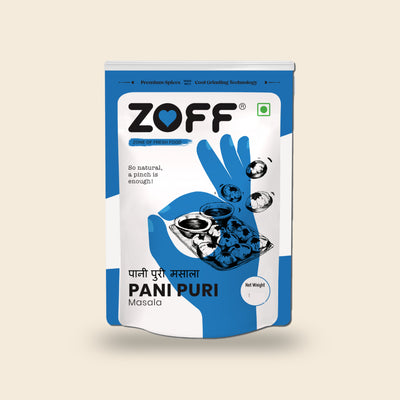
ZOFF (Zone of Fresh Foods) makes a dedicated Pani Puri Masala using cool grinding technology below 60°C, which keeps the volatile oils in the mint, cumin, and amchur from burning off during processing. The result is a finer grind that dissolves in water without leaving sediment, packed in resealable zip-lock packaging to keep moisture out between uses. Browse the full blended spices range on the ZOFF website and stock up before your next pani puri session at home.
Explore Other Blogs
Burger Recipes|Zingy Parcel|Bhelpuri|Makhana Chaat|Dabeli
Disclaimer:The information in this blog is for general informational purposes gathered from various sources. Zoff Foods does not guarantee specific health or nutritional outcomes. Please consult a qualified health professional for personalised dietary advice.
Frequently asked
Can I Make Pani Puri Masala at Home?
Yes. Dry roast cumin seeds lightly, then grind them with black salt, dried mint, amchur, red chilli powder, and a pinch of dried ginger. A starting point is 2 tablespoons cumin powder, 1 tablespoon black salt, 1 tablespoon amchur, 1 teaspoon red chilli powder, and 1 tablespoon dried mint. Grind everything together to a fine powder and store in an airtight jar.
How Long Does Homemade Pani Last?
In the fridge, 2 to 3 days. The mint and coriander lose their freshness after that, and the pani starts tasting dull. You can freeze pani in ice cube trays and thaw it when needed; it keeps for 3 to 4 months frozen.
Why Does My Pani Puri Get Soggy?
You are assembling too early. Fill each puri only when you are about to eat it. Also make sure the puris are fully crisp. Soft puris absorb water faster and collapse within seconds.
What Is the Difference Between Pani Puri and Golgappa?
The name. Pani puri is used in Maharashtra, golgappa in Delhi and North India, and puchka in Bengal. The recipe, technique, and format are the same, with minor regional differences in the filling and pani flavour.
Can I Use Chaat Masala Instead of Pani Puri Masala?
In a pinch, yes, but the result will taste different. Chaat masala is designed as a dry sprinkle and has more amchur relative to the other spices. Pani puri masala has a higher proportion of black salt and cumin because it needs to carry flavour through liquid. If you substitute, add extra black salt and a squeeze of lemon juice to compensate.