
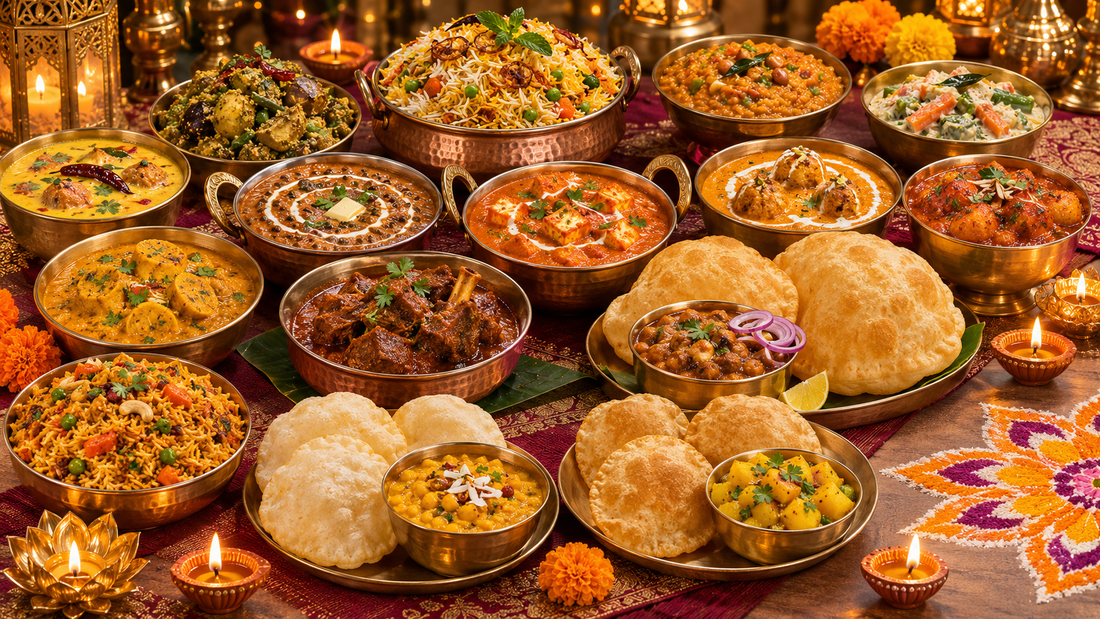
Traditional Diwali food is the savoury heart of the festival: slow-cooked dals, rich paneer gravies, festive breads and regional rice dishes served at the family meal after Lakshmi Puja. Most homes keep the menu satvik (no onion or garlic in many families), cook with ghee rather than oil, and lean on whole spices tempered at the end. This list covers only main dishes and sides. No mithai, no namkeen.
Diwali is now a five-day festival for well over a billion people, and the food on the table changes every few hundred kilometres. A Punjabi home will not eat what a Bengali home eats on Kali Puja night, and a Gujarati kitchen has a dish nobody else makes. India grows roughly three-quarters of the world's spices, and this is the week most of that harvest ends up in a tadka. Here is what actually gets cooked, region by region.
North Indian Diwali Recipes
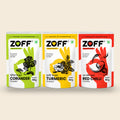
1. Dal Makhani: Whole urad and rajma simmered for four to six hours with butter and cream. The slow cook matters more than the recipe; most restaurant versions use a pressure cooker and lose the body. A pinch of Garam Masala stirred in at the end lifts it without overpowering the dal.
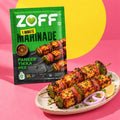
2. Paneer Butter Masala: The one dish on nearly every Diwali party menu in Delhi and Punjab. Tomato, cashew and cream base, mild heat, and paneer added only in the last two minutes so it stays soft.
3. Chole Bhature: Dark, tangy chickpeas (the colour comes from a tea bag or dried amla in the boil) with puffed, leavened bhature. A Diwali brunch staple more than a dinner dish.
4. Puri with Aloo Sabzi: The most common dish prepared on Diwali across Uttar Pradesh and Bihar. The sabzi is thin, tomato-based, no onion, and tempered with cumin, hing and dried red chilli. Puris are deep-fried in ghee for the puja thali.
5. Malai Kofta: Paneer and potato dumplings in a saffron-cream gravy. Fry the koftas ahead and drop them into the gravy only when serving, or they fall apart.
6. Kashmiri Dum Aloo: Baby potatoes pricked, fried, then slow-cooked in a yoghurt gravy with fennel, dry ginger and Kashmiri red chilli. Deep red, mild, and one of the oldest festive preparations in the Valley.
7. Kadhi Pakora: A besan-yoghurt curry with gram-flour fritters. Common in Punjab, Rajasthan and Gujarat; the Gujarati version is sweeter and thinner.
West Indian Diwali Dishes
8. Undhiyu: Gujarat's winter vegetable medley: surti papdi, purple yam, baby brinjals and methi muthiya cooked upside-down in a sealed pot. Traditionally made on Bestu Varas (Gujarati New Year, the day after Diwali).
9. Gatte ki Sabzi: Rajasthan's answer to a vegetable-scarce desert. Steamed gram-flour dumplings in a tangy yoghurt curry. Keeps well, which is why it shows up on long Diwali feasts.
10. Masala Bhaat: Maharashtra's one-pot spiced rice with tendli, peas and goda masala, finished with fresh coconut. Served with a side of koshimbir.
East Indian Deepawali Recipes
11. Luchi with Cholar Dal: Bengal's Diwali coincides with Kali Puja. White flour luchis (never atta) with chana dal cooked with coconut, raisins and a bay-leaf tempering.
12. Kosha Mangsho: Slow-braised mutton in a thick, dark onion gravy, eaten on Kali Puja night in many Bengali households. The cook takes about 90 minutes; the onions must go almost black before the meat goes in.
South Indian Diwali Food Ideas
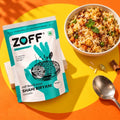
13. Hyderabadi Veg Dum Biryani: Layered basmati and vegetables sealed with dough and cooked on dum. Use Biryani Masala in the marinade and whole spices in the rice water, not both in one place.
14. Bisi Bele Bath: Karnataka's lentil-rice-vegetable dish, heavy on tamarind and a dedicated spice blend with fenugreek and dried coconut. Served with ghee on top.
15. Avial: Kerala's mixed-vegetable dish in coconut and yoghurt with curry leaves and coconut oil. Light, cooling, and the right counterweight to everything above.
A Simple Framework for a Diwali Party Menu
|
Day |
Cook |
Why |
|
Dhanteras |
Besan ladoo, chakli, namak pare |
Keep 2+ weeks; frees the puja day |
|
Choti Diwali |
Kaju katli, mathri, chivda |
Gift boxes get packed tonight |
|
Diwali |
Gulab jamun, paneer makhani, pulao, puri-aloo |
Fresh for Lakshmi Puja dinner |
|
Govardhan Puja |
Annakut-style spread, leftover sweets |
Traditionally 56 dishes; 8 is fine |
|
Bhai Dooj |
Shrikhand or jalebi-rabri |
Light, sibling-lunch dessert |
Use the 3-2-1 rule. Three gravies (one dal, one paneer, one regional), two carbohydrates (one bread, one rice), one cooling side (raita, avial or koshimbir). That covers 10 to 12 guests without the host cooking for two days. For a vegetarian-only table, swap kosha mangsho for gatte ki sabzi; for a North-only crowd, drop avial and add a raita. Diwali cooking ideas work best when the menu has one dish each guest will not have eaten elsewhere that week.
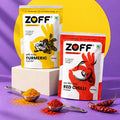
Timing, if the meal is at 8 pm: dal and koftas done by noon, gravies by 4 pm, rice on dum at 7 pm, breads fried last. Spice blends do the heavy lifting here; a reliable garam masala or chole masala saves 20 minutes of roasting and grinding per dish.
Two practical notes. Ghee has a smoke point near 250°C, so it holds up to deep-frying puris far better than butter. And tempering (tadka) should always be the last step, because the volatile oils in cumin and hing fade within an hour of hitting hot fat.
That is the list. Fifteen dishes, four regions, zero sweets. Pick five, cook them well, and the Diwali table takes care of itself.
Explore Other Blogs
Diwali Snacks|Dussehra Special Recipes|Raksha Bandhan Foods|Dussehra Meal Ideas|Ganesh Chaturthi Prasad
Disclaimer:The information in this blog is for general informational purposes gathered from various sources. Zoff Foods does not guarantee specific health or nutritional outcomes. Please consult a qualified health professional for personalised dietary advice.
Frequently asked
What is the traditional food eaten on Diwali?
Traditional Diwali food is a vegetarian, mostly satvik meal cooked after Lakshmi Puja: dals such as dal makhani or cholar dal, paneer gravies, puri or luchi, and a regional rice dish like masala bhaat or veg dum biryani. Ghee, whole spices and a final tadka are common to almost every region.
Which dishes are made on Diwali in North India?
North Indian homes typically make puri with aloo sabzi, dal makhani, paneer butter masala, malai kofta, chole bhature and kadhi pakora on Diwali. Kashmiri dum aloo is the festive dish in the Valley. Most of these are cooked without onion and garlic on the puja day itself.
What do Bengalis eat on Diwali?
Bengal celebrates Kali Puja on Diwali night, and the meal is luchi with cholar dal (chana dal with coconut and raisins). Many households also cook kosha mangsho, a slow-braised mutton in dark onion gravy, after the puja. Fish or mutton is common, unlike the vegetarian norm elsewhere.
What are good Diwali party recipes for a large group?
For 10 to 12 guests, use a 3-2-1 menu: three gravies (one dal, one paneer, one regional dish), two carbohydrates (one bread, one rice) and one cooling side such as raita or avial. Dal makhani, paneer butter masala, veg dum biryani, puri and raita cover most tastes and can be prepared ahead.
Is Diwali food always vegetarian?
Mostly, but not everywhere. In North, West and much of South India the Diwali meal is vegetarian and often satvik, without onion or garlic. In Bengal and parts of the Northeast, Kali Puja night includes mutton or fish. The vegetarian rule usually applies to the puja day, not the whole five-day festival.
What can I cook on Diwali that is not sweet or fried?
Slow-cooked gravies and rice dishes work best: dal makhani, Kashmiri dum aloo, undhiyu, gatte ki sabzi, bisi bele bath, avial and veg dum biryani are all festive without being deep-fried or sweet. Serve them with steamed rice or phulka instead of puri to keep the meal light.