All You Need to Know About Types of Chilli in India
Ask two people in India what "chilli" means and you'll get two completely different answers. For someone in Andhra, it's a fiery red that makes your eyes water. For a Kashmiri cook, it's mostly about that gorgeous deep-red colour, with barely any heat. Both are right because India doesn't really have a chilli. It has hundreds.
In fact, the country grows over 400 varieties of chillies, each with its own personality, colour, and place in a regional kitchen. That's a lot to keep track of, so let's cut through the noise and look at the chilli varieties that actually matter for everyday cooking what they taste like, how hot they get, and when to reach for which.
A quick word on heat: the Scoville scale
Before we get into the different types of chilli, it helps to know how heat is measured. The Scoville scale (SHU) rates how much capsaicin the compound responsible for the burn a chilli contains. A mild Kashmiri sits around 1,000–2,000 SHU. A ghost pepper crosses a million. Same family, wildly different experience. Keep that number in mind as we go.
The Everyday Heroes
1. Kashmiri Chilli: Colour without the fire
If your gravy looks restaurant-red but isn't blowing your head off, there's a good chance Kashmiri chilli is behind it. It's one of the mildest of all chilli types, prized almost entirely for its rich crimson colour and gentle, smoky warmth rather than heat. This is the chilli that gives Rogan Josh and tandoori dishes that signature glow. If you're cooking for kids or simply don't love spice, this is your friend.

2. Guntur chilli: The workhorse of Indian heat
Now we turn up the temperature. Grown mainly in Andhra Pradesh, the Guntur chilli (especially the Sannam variety) is one of India's most important it accounts for a huge share of the country's chilli exports. Sitting around 30,000–40,000 SHU, it brings genuine, confident heat along with a deep red tone. This is the spice doing the heavy lifting in most South Indian and everyday North Indian cooking. When a recipe just says "red chilli powder," it's usually something in this family.

3. Byadgi chilli: The colour specialist
From Karnataka comes the Byadgi, instantly recognisable by its wrinkled skin and intensely deep red shade. Like Kashmiri, it's loved more for colour than fire, which is why it's a backbone of blends like Goda masala and South Indian curries. It's also one of India's GI-tagged chillies a mark of authentic, region-specific quality.

The Serious Stuff: India's Spiciest Chillies
Bhut Jolokia: The ghost pepper
No list of all types of chilli in India is complete without the legend. The Bhut Jolokia, or ghost pepper, from the Northeast (Assam, Nagaland, Manipur, Arunachal) is the spiciest chilli in India and it once held the Guinness record as the hottest in the world back in 2007. We're talking over 1,000,000 SHU. This isn't a "season your dal" chilli; it's used in tiny amounts in fiery pickles and chutneys, and even shows up in non-culinary uses. Handle with genuine respect.

Other regional gems
India's chilli map runs deep. There's the small, citrusy Kanthari from Kerala, the bright green Jwala popular in Gujarat, and the smoky Dalle Khursani from Sikkim each carrying its region's flavour identity. You don't need them all, but it's lovely to know they exist.
So which is the best chilli variety in India?
Honestly? There's no single winner it depends on what you're cooking. For colour with mild heat, Kashmiri. For everyday balanced heat, Guntur-style red chilli powder. For vibrant blends, Byadgi. For thrill-seekers, the ghost pepper. The "best" one is simply the right one for your dish.
What matters just as much as the variety is how the chilli is processed. Many powders are ground at high speed, which generates heat and quietly burns off the natural oils that carry aroma and that signature pungency leaving you with dull, flat colour and not much else.
This is where Zoff does things differently. Their chilli range is made using cool-grinding technology, grinding at low temperatures to lock in the natural oils, aroma, and bright colour instead of cooking them away. If you want everyday heat, Red Chilli Powder is made from hand-picked chillies, pure and free from added colours. For that deep restaurant-red with mild heat, Kashmiri Chilli Powder delivers vibrant colour and a gentle kick. And if you prefer grinding your own, their whole dried Guntur chillies let you do exactly that. Everything comes in air-tight, resealable packs, so the freshness stays put.
Once you understand the varieties, you stop buying "just chilli" and start choosing the right chilli. That single shift will quietly upgrade everything you cook.
Explore Other Blogs
History of Spices|Best Masala Companies|Indian Spices List|Spice Routes|Home Cook Guide
Disclaimer: The information in this blog is for general informational purposes gathered from various sources. Zoff Foods does not guarantee specific health or nutritional outcomes. Please consult a qualified health professional for personalised dietary advice.
Frequently Asked Questions
1. How many types of chilli are there in India?
India cultivates over 400 varieties of chillies, ranging from mild, colour-rich types like Kashmiri and Byadgi to extremely hot ones like Bhut Jolokia. Each variety differs in heat level, colour, aroma, and the regional cuisine it belongs to.
2. Which is the spiciest chilli in India?
The spiciest chilli in India is the Bhut Jolokia, also known as the ghost pepper, grown in the North-eastern states. It measures over 1,000,000 Scoville Heat Units (SHU) and was once recognised as the hottest chilli in the world in 2007.
3. Which chilli is the mildest and used for colour?
Kashmiri chilli is the mildest popular variety, rated around 1,000–2,000 SHU. It is valued mainly for the deep red colour and smoky aroma it adds to dishes like Rogan Josh and tandoori preparations, without making the food very spicy.
4. What is the difference between Kashmiri and Guntur chilli?
Kashmiri chilli is mild and used mainly for vibrant red colour, while Guntur chilli (around 30,000–40,000 SHU) is significantly hotter and used for genuine heat. Kashmiri suits colour-focused dishes, whereas Guntur is the everyday choice for spicy Indian cooking.
5. Which is the best chilli variety to use in everyday cooking?
For everyday cooking, a Guntur-style red chilli powder offers balanced heat and colour, while Kashmiri chilli is best when you want colour with minimal spice. The best variety depends on the dish, so many cooks keep both a mild and a hot chilli powder on hand.
6. Why does the way chilli is ground affect its quality?
Chillies contain natural oils that carry their aroma, colour, and pungency. High-speed grinding generates heat that can burn off these oils, dulling flavour and colour. Cool-grinding methods, like those used by Zoff, grind at low temperatures to preserve the chilli's natural oils, aroma, and vibrant colour.
STOCK YOUR SPICE RACK
Everyday Powdered Spices for Flavourful Cooking
Turmeric Powder (Haldi): Essential Spice for Authentic Indian Cooking
 Sold out
Black Salt(Kala Namak)
Coriander/Dhaniya Powder
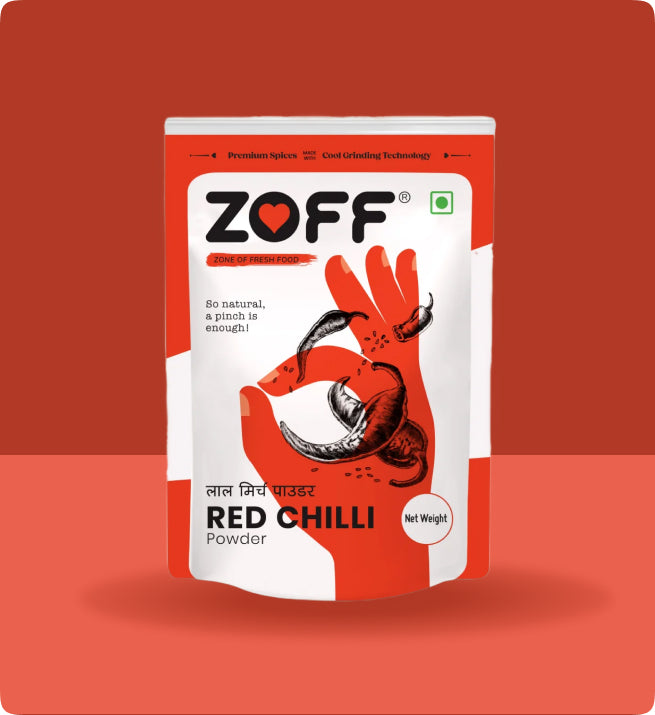
Red Chilli Powder/Lal Mirch Powder
 Sold out
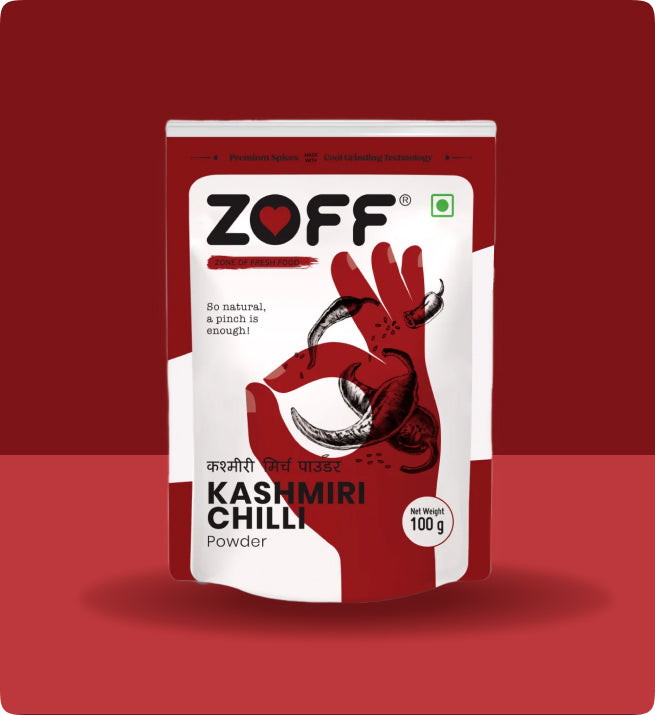
Kashmiri Chilli Powder: Authentic & Flavourful
Roasted Cumin Powder (Bhuna Jeera): Spice for Rich Aroma & Flavour
Amchur Powder (Dry Mango): Tangy Spice for Indian Cooking