

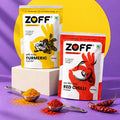




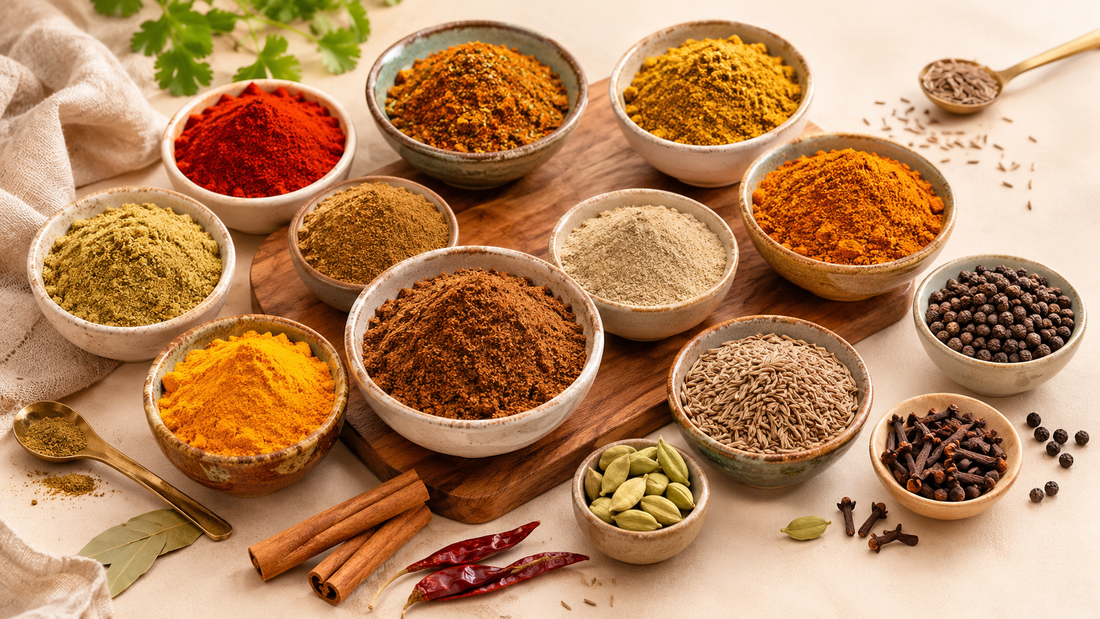
Indian spice blends, or masalas, are ready mixes of ground or whole spices, each made for a specific job. Garam masala warms a finished curry, chaat masala adds tang to snacks, sambar powder seasons lentils and biryani masala perfumes rice. Five or six blends cover most everyday Indian cooking.
Walk into any Indian kitchen and you will find a masala dabba and a shelf of masala packets. A good chicken curry can need 12 to 15 spices, and a blend has already measured, roasted and ground them for you. At home, what matters is which blend to use, and when.
What are Spice Blends
Spice blends, also referred to as mixed spices or masalas, are a fundamental component of Indian cooking. They are meticulously crafted mixtures of various ground spices and herbs, designed to enhance the taste, aroma, and colour of dishes. These blends are used to season, flavour, and transform a wide range of Indian recipes, from curries and biryanis to snacks and beverages.
The art of creating spice blends has been perfected over centuries in India, resulting in a multitude of regional variations. Each blend has its unique composition and purpose, making it an essential ingredient in the culinary tapestry of India.
The 12 Essential Indian Spice Blends
1. Garam masala
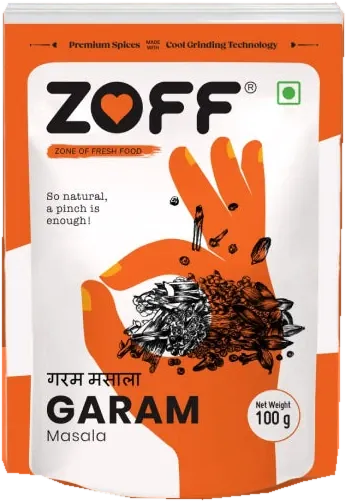
A warm blend of green and black cardamom, cinnamon, cloves, black pepper, cumin and bay leaf. Stir it in during the last two minutes of cooking, or the aroma cooks off. Garam Masala is the finishing touch for rajma, dal makhani and paneer gravies.
2. Kitchen King masala
The all-rounder of North Indian vegetable cooking: coriander, cumin, turmeric, chilli, dry ginger and kasuri methi with a little warm spice. Add Kitchen King Masala once the onion-tomato base leaves oil, for mixed veg, aloo gobi or kadai paneer.
3. Chaat masala
Tangy and salty, from amchur, kala namak, roasted cumin and black pepper. It is never cooked. A pinch of chaat masala over fruit, raita, bhel or a sliced cucumber changes the whole plate.
4. Chicken masala
Balanced for meat: coriander, red chilli, turmeric, cumin, fennel and whole spices for depth. Use chicken masala twice: a spoon in the marinade, and another spoon in the gravy as it simmers.
5. Biryani masala
The most fragrant blend on the shelf, with shahi jeera, mace, nutmeg, star anise and cardamom. Mix half of the biryani masala into the marinade and sprinkle the rest between rice layers before dum.
6. Sambar powder
Roasted coriander, red chillies, chana dal, urad dal, fenugreek and curry leaves. The lentils thicken the sambar as it simmers with toor dal and tamarind.
7. Rasam powder
Thinner and sharper than sambar powder, led by black pepper and cumin. Simmer it in a tomato-tamarind broth for a quick, light rasam.
8. Pav bhaji masala
Kashmiri chilli, coriander, fennel, amchur and black salt. Cook it into the mashed vegetables with butter so the colour turns deep red.
9. Chole (chana) masala
Dark and tangy, from amchur, dried pomegranate seeds, black cardamom and black pepper. Add it with the boiled chickpeas and simmer for at least 10 minutes.
10. Tandoori masala
Kashmiri chilli, coriander, cumin, dry ginger, garlic and kasuri methi. Whisk it into thick curd with lemon juice and marinate paneer or chicken for 2 to 6 hours before grilling.
11. Panch phoron
A whole-spice blend from Bengal and Odisha: equal parts cumin, fennel, fenugreek, nigella and black mustard. Crackle it in hot oil before the vegetables go in.
12. Curry powder
A turmeric-heavy mix shaped by British-era cooking, not a traditional Indian masala. Handy for quick stews and fusion dishes.
Which Masala Works Best for Which Dish
|
Spice Blend |
Flavour Profile |
Best Dishes |
When to Add |
|---|---|---|---|
|
Garam masala |
Warm, sweet-spicy |
Rajma, dal makhani, paneer gravies |
Finish (last 2 min) |
|
Kitchen King masala |
Savoury, rounded |
Mixed veg, aloo gobi, kadai paneer |
Simmer |
|
Chaat masala |
Tangy, salty |
Fruit chaat, raita, bhel, salads |
Sprinkle raw |
|
Chicken masala |
Robust, earthy |
Chicken curry, egg curry |
Marinade + simmer |
|
Biryani masala |
Floral, aromatic |
Chicken, mutton or veg biryani, pulao |
Marinade + layering |
|
Sambar powder |
Earthy, mildly hot |
Sambar, vegetable kootu |
Simmer |
|
Rasam powder |
Peppery, sharp |
Tomato rasam, pepper rasam |
Simmer |
|
Pav bhaji masala |
Tangy, smoky-red |
Pav bhaji, masala pav |
Simmer with butter |
|
Chole masala |
Dark, tangy |
Chole, chana masala |
Simmer 10+ min |
|
Tandoori masala |
Smoky, bold red |
Tandoori chicken, paneer tikka |
Curd marinade |
|
Panch phoron |
Nutty, bittersweet |
Bengali dal, aloo, pumpkin sabzi |
Bloom in oil first |
|
Curry powder |
Mild, turmeric-led |
Quick stews, fusion dishes |
Early, with onions |
How to Choose, Use and Store Indian Masalas:
The Bloom, Simmer, Finish rule. Every blend has a moment. Whole blends like panchphoron bloom in hot oil, cooking blends like sambar and kitchen king simmer in the gravy, and garam or chaat masala go in at the end.
Build a starter kit in three steps:
- Start with garam masala, Kitchen King, chaat masala and one regional blend you cook often, such as sambar powder or pav bhaji masala.
- Add chicken and biryani masala if you cook meat or rice dishes on weekends.
- Then add tandoori masala and panch phoron.
Buying tips: Check the packing date, expect a strong aroma on opening, and skip packs with added colour or fillers.
Storage tips: Use airtight glass or steel jars, away from the stove, sunlight and moisture, with a dry spoon. Ground blends taste best within six months; homemade ones within two to three.
Explore Other Blogs
Beginners Spices|Everyday Spices|Indian Spices Guide|Is Zoff Spices Good|Spices History
Disclaimer: The information in this blog is for general informational purposes gathered from various sources. Zoff Foods does not guarantee specific health or nutritional outcomes. Please consult a qualified health professional for personalised dietary advice.
Frequently asked
What are the most commonly used Indian spice blends?
The most commonly used Indian spice blends are garam masala, Kitchen King masala, chaat masala, chicken masala, biryani masala, sambar powder and pav bhaji masala. Garam masala is the most widely used across North Indian curries and dals.
What is the difference between garam masala and curry powder?
Garam masala is a traditional blend of warm spices like cardamom, cinnamon, cloves and pepper, added at the end for aroma. Curry powder is a turmeric-heavy mix shaped by British-era cooking and added early.
Which Indian masalas should every beginner have?
Start with garam masala, Kitchen King masala, chaat masala and one regional blend such as sambar powder or pav bhaji masala. Add chicken or biryani masala if you cook meat or rice dishes often.
How do you use different Indian spice blends in cooking?
Follow the Bloom, Simmer, Finish rule: bloom whole blends like panch phoron in hot oil, simmer cooking blends like sambar powder in the gravy, and add garam masala or chaat masala at the end.
What spices are typically found in garam masala?
Garam masala usually contains green and black cardamom, cinnamon, cloves, black pepper, cumin, coriander and bay leaf. Some regional versions add nutmeg, mace or star anise.
How should homemade Indian masala blends be stored?
Store homemade masala in an airtight glass or steel jar, away from heat, sunlight and moisture, and use a dry spoon. Make small batches and finish them within two to three months.