Amchur Powder: Uses, Substitutes & How to Buy the Real Thing
Share
If you have ever eaten chaat from a street cart and wondered what gives it that sour punch that lime alone cannot explain, you have probably tasted amchur without knowing it. Amchur powder (sometimes spelled aamchur) is ground dried green mango, and it does something in Indian cooking that no other souring agent quite replicates. The tang is fruity rather than sharp, warm rather than acidic, and it works in dry preparations where a liquid souring agent would ruin the texture.
What is amchur powder?
The name comes from "aam" (mango) and "chur" (powder). Raw, unripe green mangoes are peeled, sliced thin, sun-dried until brittle, and ground into a fine powder. The practice originated in northern India, where green mangoes are abundant during summer and drying them was a way to preserve that tartness for year-round use. Good amchur has a light tan colour, a slightly sticky texture, and a smell that is unmistakably mango even after drying.
How to use it
Amchur shows up most often in dishes where you want sourness without moisture.
Chaat is the obvious one. That tangy layer in papdi chaat, bhel puri, and aloo tikki comes partly from amchur, either directly or through chaat masala blends that list it as a core ingredient. Sprinkle it on sliced fruit with black salt, and the plate disappears before dinner.
But amchur does more than finish street food:
Stir half a teaspoon into a dry aloo sabzi in the last two minutes of cooking, and the potatoes wake up.
Add a pinch to chole or rajma toward the end for sourness that rounds out the spice without thinning the gravy.
Use it in marinades for paneer tikka and grilled vegetables, where it tenderises slightly while adding tang.
Certain dal preparations in Rajasthani and Punjabi cooking call for it, where tamarind would be too heavy.
The general principle: anywhere you want tang in a dry or thick dish, amchur is the right call. For thin curries and drinks, lemon or tamarind dissolve more easily. Amchur can clump if you dump it into liquid without mixing it into the dry spice base first.
Substitutes when you run out
Lemon or lime juice is the most practical swap: about a tablespoon of juice for every teaspoon of amchur, added toward the end of cooking. Sharper and less fruity, but it works.
Tamarind paste fits wet dishes well, roughly 1:1 in sourness, though the taste leans more earthy than fruity.
Sumac, if you have it from Middle Eastern cooking, is the closest match to amchur's dry, fruity tartness.
Anardana (dried pomegranate seeds) is another dry souring agent common in North Indian kitchens.
None of these replicate amchur exactly. They cover the sourness, but that specific dried-mango warmth is hard to fake.
How to buy the real thing
Amchur is one of those powdered spices where quality varies a lot between brands. A few things to check before you buy:
The colour should be beige to light brown. Bright yellow or off-white chalky powder means something may have been added.
The smell should be distinctly mango, not flat or dusty.
Look for FSSAI compliance, a manufacturing date, and an ingredient list that says dried mango powder and nothing else.
Avoid loose amchur from open bins. It degrades faster once exposed to air and humidity.
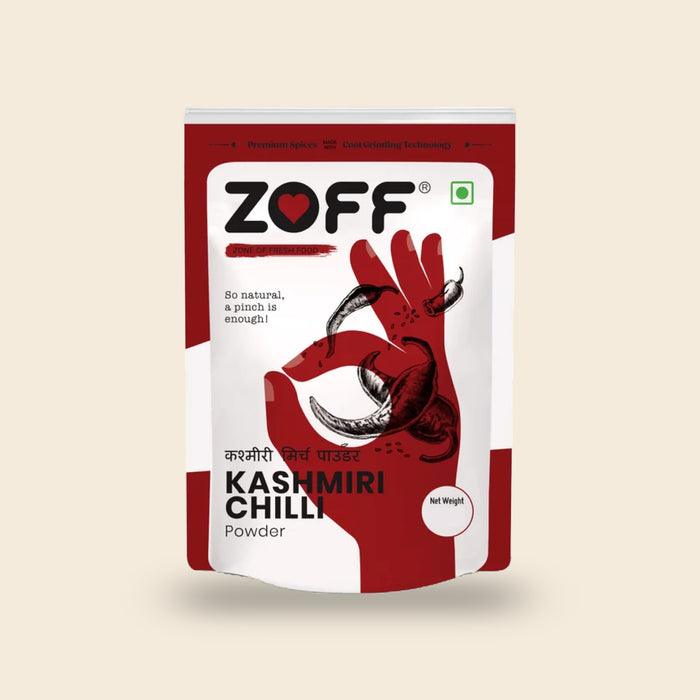
ZOFF (Zone of Fresh Foods) makes an amchur powder that is ground using cool grinding technology below 60°C, which preserves the natural mango flavour and aroma that conventional high-speed grinding burns off. It comes in resealable zip-lock packaging, so the powder stays fresh between uses. You can find it alongside their full range of powdered spices and seasonings on the ZOFF website.
Frequently Asked Questions
What does amchur powder taste like?
Tart, fruity, and slightly warm. Think of biting into a raw green mango, but dried and concentrated. The sourness is milder and more rounded than lemon juice or vinegar.
Can I use amchur powder in non-Indian recipes?
There is no reason you cannot. It works anywhere you want dry, fruity acidity: roasted vegetables, grain bowls, spice rubs for grilled meat, or even sprinkled into a salad dressing. It pairs well with cumin, coriander, and chilli.
How long does amchur powder last?
In an airtight container in a cool, dry place, amchur keeps its flavour for about a year. After that it does not go bad, but the tang fades. Zip-lock packaging helps, since the main enemy is moisture.
Is amchur powder the same as dried mango powder?
Yes. Amchur, aamchur, and dried mango powder all refer to the same thing: ground sun-dried unripe green mangoes.
How much amchur should I use?
Start with half a teaspoon per dish and adjust. A little goes further than you would expect, and too much can make a dish aggressively sour.
Z
ABOUT THE AUTHOR
ZOFF Foods
ZOFF Foods is built on the belief that great taste starts with great ingredients. With cool grinding technology and a focus on freshness, ZOFF brings authentic Indian flavours to every kitchen.


 Sold out
 Sold out
 Sold out