






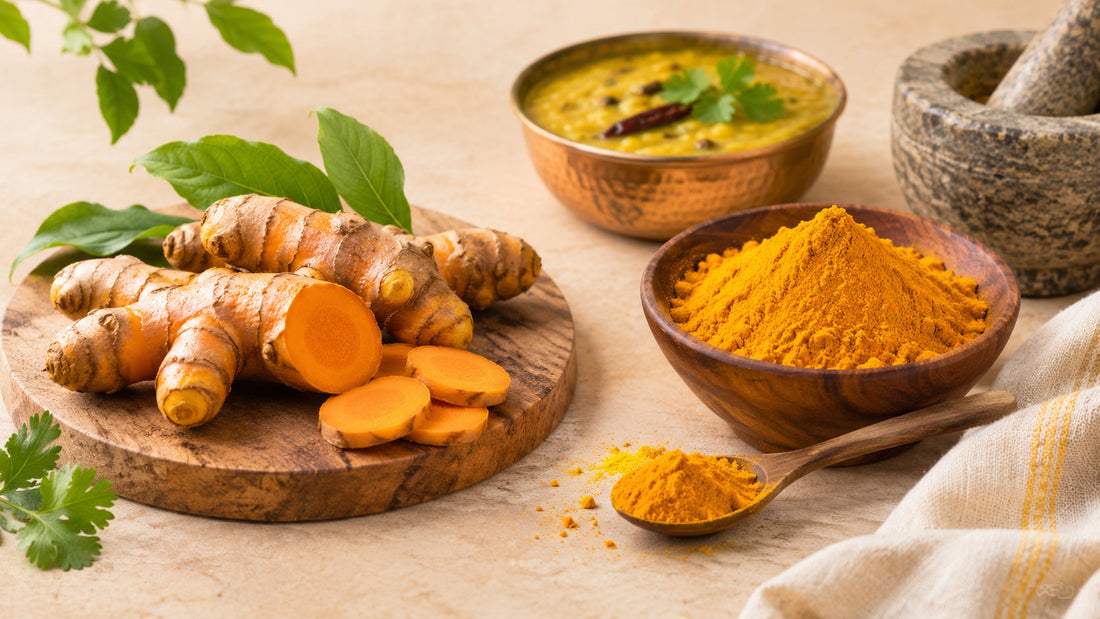
Every winter, the sabzi mandi fills up with knobbly roots most of us walk straight past. That's kachi haldi, or fresh turmeric, in season roughly November to January. So if you already own a jar of haldi powder, is fresh turmeric worth the yellow fingers?
Fresh turmeric and turmeric powder come from the same plant (Curcuma longa) but behave differently in the kitchen. Fresh turmeric is juicy and slightly gingery, suiting pickles, chutneys and raw preparations. Turmeric powder is drier, more concentrated by volume and better for everyday curries, dals and spice blends. Most Indian kitchens do best with both.
Fresh Turmeric vs Turmeric Powder at a Glance
|
Factor |
Fresh turmeric (kachi haldi) |
Turmeric powder |
|---|---|---|
|
Form |
Fresh rhizome |
Dried, ground rhizome |
|
Flavour |
Bright, peppery, slightly bitter |
Warm, earthy, mellow |
|
Moisture |
High (around 78%) |
Low (dried to about 10%) |
|
Best for |
Pickles, chutneys, winter sabzi |
Curries, dals, gravies, marinades |
|
Shelf life |
2–3 weeks refrigerated |
Months in an airtight jar |
|
Prep |
Wash, peel, grate |
Ready to use |
|
Availability |
Winter season |
Year-round |
What's the Real Difference Between Fresh Turmeric and Turmeric Powder?
The short version is water. Fresh rhizomes hold roughly 78% moisture and are boiled, cured and dried to about 10% before grinding. That's why a teaspoon of powder does the work of a tablespoon of grated root.
Flavour shifts too: fresh turmeric's citrusy top notes fade during drying, replaced by a deeper warmth that opens up in hot oil.
Curcumin depends more on variety, curing and storage than on form. Studies of dried turmeric have recorded anywhere from under 3% to about 7% curcumin, and one storage study saw it fall from 2.8% to 0.5% in poorly stored samples. Stale powder genuinely loses strength.
Either way, your turmeric almost certainly grew in India, which produces around 70–80% of the world's supply.
Fresh Turmeric Benefits and Uses in Cooking
Fresh turmeric shines where texture and brightness matter:
- Kachi haldi ka achar: the Rajasthani and Gujarati winter pickle needs just turmeric, lemon juice and salt.
- Kachi haldi ki sabzi: Rajasthan's winter dish cooked in ghee and curd; Gujarat's haldar nu shaak is a close cousin.
- Haldi doodh and chutneys: grate a little straight in.
Whichever form you use, add a pinch of black pepper. In a 1998 clinical study, piperine from pepper raised curcumin absorption by 2,000%.
Turmeric Powder Uses: Where It Wins
Bloom ¼ teaspoon in hot ghee or oil for 10–15 seconds before the onions go in; any longer and it turns bitter. It colours dal tadka, sambar and kadhi evenly, helps tandoori marinades cling and crisp, and keeps masala blends consistent batch after batch.
Can You Replace Fresh Turmeric with Turmeric Powder?
Yes. The standard ratio is 1 tablespoon grated fresh turmeric ≈ 1 teaspoon turmeric powder, and a 1-inch piece of root gives roughly a tablespoon grated.
|
Recipe calls for |
Use instead |
|---|---|
|
1 tsp turmeric powder |
1 tbsp grated fresh (about 1-inch piece) |
|
½ tsp turmeric powder |
1½ tsp grated fresh |
|
1 tbsp grated fresh |
1 tsp turmeric powder |
Caveats: roots vary in size and moisture, so start with less and taste. Don't swap powder into achar, because nothing replaces that crunch. And always add powder to fat, not water, or it tastes raw.
Which Turmeric Works Better? A Dish-by-Dish Framework
Use the 3C test:
- Crunch: does the dish want raw bite or texture? Go fresh.
- Cook time: is there a tadka or a long simmer? Go powder.
- Consistency: do you need the same colour and taste every time? Go powder.
|
Dish |
Better choice |
Why |
|---|---|---|
|
Dal tadka, sambar |
Powder |
Blooms evenly in fat |
|
Kachi haldi achar |
Fresh |
Needs crunch |
|
Smooth gravies |
Powder |
No fibrous bits |
|
Tandoori marinade |
Powder |
Dry coating sticks |
|
Chutney, raita |
Fresh |
Bright, raw flavour |
|
Haldi doodh |
Either |
Fresh tastes brighter |
How to Use Fresh Turmeric in Indian Cooking
- Pick firm, plump roots with bright orange flesh.
- Wear gloves and scrape the peel off with a spoon.
- Grate finely for gravies; cut into thin matchsticks for pickles.
- Store unpeeled roots wrapped in paper towel in the fridge, or freeze grated turmeric in ice-cube trays.
- Pair it with a fat and black pepper.
Where ZOFF Fits In
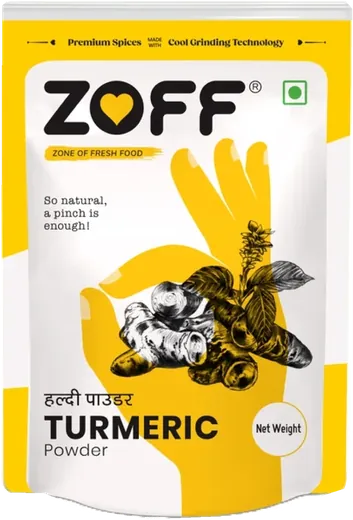
ZOFF Turmeric Powder covers daily tadkas, gravies and marinades. If you prefer grinding at home, ZOFF Whole Turmeric gives you dried whole turmeric fingers (not fresh root) to grind in small batches. And when the mandi has kachi haldi, grab a handful for achar.
Explore Other Blogs
Turmeric Powder Benefits|Turmeric Daily Dosage|Turmeric History|Turmeric Adulteration Home Tests|Haldi Milk Benefits
Disclaimer: The information in this blog is for general informational purposes gathered from various sources. Zoff Foods does not guarantee specific health or nutritional outcomes. Please consult a qualified health professional for personalised dietary advice.
Frequently asked
What is the difference between fresh turmeric and turmeric powder?
Both come from the same plant. Fresh turmeric is the raw, moist root with a bright, peppery taste; turmeric powder is the dried, ground root, more concentrated by volume and longer-lasting.
Is fresh turmeric better than turmeric powder for cooking?
Neither wins overall. Fresh suits pickles, chutneys and raw dishes; powder suits curries, dals and tadkas because it blends evenly into fat.
Can I substitute turmeric powder for fresh turmeric?
Yes. Use 1 teaspoon of powder per tablespoon of grated fresh turmeric, adjusting to taste. Avoid substituting in pickles.
How much fresh turmeric equals one teaspoon of turmeric powder?
About 1 tablespoon of grated fresh turmeric, or roughly a 1-inch piece of root.
Does fresh turmeric taste different from turmeric powder?
Yes. Fresh is brighter and slightly citrusy; powder is warmer and earthier.
Which turmeric is best for Indian curries and gravies?
Turmeric powder. It blooms evenly in hot oil, gives consistent colour and leaves no fibre in smooth gravies.
Does drying turmeric affect its curcumin content?
Proper drying retains curcumin well, but variety, curing and storage all affect the final level. Poorly stored powder loses curcumin over time.