





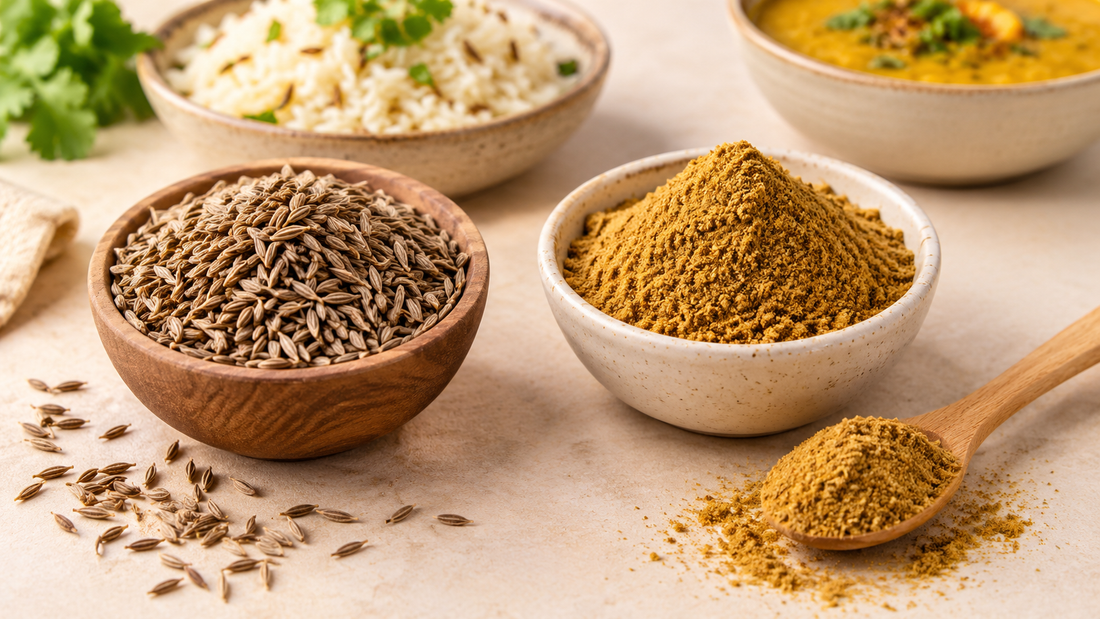
Cumin seeds and cumin powder come from the same spice but are used differently in cooking. Whole cumin seeds are commonly added to hot oil or ghee during tempering to release their aroma. Cumin powder blends easily into gravies, curries, marinades and spice mixes. The best choice depends on the dish, desired texture and stage of cooking.
Most Indian masala dabbas hold jeera twice: as seeds and as powder. India grows roughly 70% of the world's cumin, mostly in Gujarat and Rajasthan, yet most of us switch between the two forms out of habit. Here's how to choose on purpose.
Cumin Seeds vs Cumin Powder
|
|
Whole cumin seeds |
Ground cumin (jeera powder) |
|---|---|---|
|
Flavour |
Nutty, toasty, rounded once bloomed in fat |
Earthy, warm, slightly bitter edge |
|
Aroma |
Released slowly with heat |
Immediate, but fades faster |
|
Texture |
Visible seeds with a light crunch |
Dissolves into the dish |
|
Cooking stage |
Start: hot oil or ghee (tadka) |
Middle: with the onion-tomato masala |
|
Common dishes |
Dal tadka, jeera rice, aloo jeera, pickles, parathas |
Paneer gravy, rajma, kebab marinades, spice blends |
|
Storage |
Holds aroma longer; airtight jar, away from the stove |
Use within months of opening; keep tightly sealed |
|
ZOFF pick |
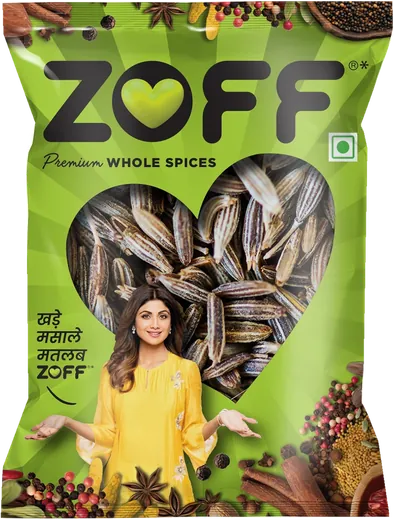
ZOFF Whole Cumin Seeds |
ZOFF Jeera Powder |
Why the Same Spice Tastes Different
Cumin's flavour lives in its volatile oil. A study of four cumin varieties from western Rajasthan measured essential oil content between 1.66% and 3.66%, with cuminaldehyde as the main aroma compound.
In a whole seed, that oil stays sealed until heat cracks the husk, which is why seeds in hot ghee smell nutty within seconds. Grinding exposes the oil to air at once: faster flavour, shorter life. McCormick rates ground spices like cumin at 2 to 4 years, against 3 to 4 years for whole spices.
Cumin Seeds Uses: When Whole Wins
Use seeds when the spice goes in first and you want to see it in the finished dish.
- Dal tadka: Heat ghee, add 1 tsp cumin seeds and let them sizzle for 20 to 30 seconds, until they turn a shade darker. Then add garlic, hing and dried red chilli, and pour over the dal.
- Jeera rice: Seeds fried in ghee coat every grain. Powder would turn the rice muddy.
- Sabzi: Aloo jeera, bhindi fry and cabbage sabzi all start with seeds crackling in oil.
Cumin Powder Uses: When Ground Wins
Use powder when the spice needs to melt into a sauce, a marinade or a no-cook dish.
- Paneer gravy: Add jeera powder with coriander, turmeric and chilli once the onion-tomato masala softens, with a splash of water so it doesn't burn.
- Marinades: Powder clings to paneer, chicken or soya chaap; seeds fall off.
- Raita, chaas and chaat: Sprinkle roasted cumin powder at the end. ZOFF's Roasted Cumin Powder is made for this.
The Stage–Texture–Time Framework
When a recipe isn't clear, ask:
- Stage: When does the cumin go in? At the start in fat → seeds. With the masala → powder. As a finishing touch → roasted powder.
- Texture: Do you want to see or bite the cumin? Yes → seeds. No → powder.
- Time: Long cook or tadka → seeds. Under 10 minutes or no-cook → powder.
Two out of three pointing the same way is your answer.
Substitution Guide: Swapping One for the Other
1 teaspoon cumin seeds ≈ ¾ teaspoon cumin powder. Published charts range from ½ to 1½ teaspoons, so start at ¾ and taste.
Going the other way, 1 teaspoon powder ≈ 1¼ teaspoons seeds, dry-roasted and crushed.
|
Dish |
Recipe says |
Swap to |
|---|---|---|
|
Dal tadka |
1 tsp seeds |
¾ tsp powder, added after the garlic on low heat |
|
Jeera rice |
1 tsp seeds |
Keep seeds; powder changes the dish |
|
Paneer gravy |
1 tsp powder |
1¼ tsp seeds, toasted and crushed |
One warning: cumin powder burns within seconds in very hot oil and turns bitter. In a tadka, lower the heat first.
Keep Both in Your Masala Dabba
You don't have to pick a side. Keep ZOFF Whole Cumin Seeds for tadkas, jeera rice and sabzi, and ZOFF Jeera Powder for gravies and marinades. Between them, every cumin recipe is covered.
Explore Other Blogs
Whole Spices vs Ground Spices|Black Salt vs Pink Salt|Cassia Bark vs Cinnamon|Kashmiri Chilli Powder vs Red Chilli Powder|Kashmiri Pulao vs Veg Biryani
Disclaimer: The information in this blog is for general informational purposes gathered from various sources. Zoff Foods does not guarantee specific health or nutritional outcomes. Please consult a qualified health professional for personalised dietary advice.
Frequently asked
What is the difference between cumin seeds and cumin powder?
Cumin powder is simply ground cumin seeds. Seeds release a nutty aroma slowly when heated in fat. Powder blends in instantly with a stronger, earthier taste, but loses aroma faster once opened.
Can you substitute cumin powder for cumin seeds?
Yes. Use about ¾ teaspoon cumin powder for every 1 teaspoon cumin seeds, and add it later, on lower heat, because it burns quickly. In jeera rice, keep the seeds.
Is cumin powder stronger than whole cumin seeds?
Spoon for spoon, yes. Powder packs more cumin into the same volume and releases flavour immediately. Whole seeds taste milder until bloomed in hot fat or toasted.
When should you add cumin seeds or cumin powder while cooking?
Add cumin seeds at the start, in hot oil or ghee, for 20 to 30 seconds. Add cumin powder in the middle, with the masala. Sprinkle roasted cumin powder at the end.
Which is better for tadka: whole cumin or ground cumin?
Whole cumin. Seeds survive hot fat long enough to release their aroma into the oil. Ground cumin scorches within seconds at tadka temperatures and turns bitter.
How much cumin powder equals one teaspoon of cumin seeds?
About ¾ teaspoon cumin powder equals 1 teaspoon cumin seeds. Sources range from ½ to 1½ teaspoons because grind size and freshness vary, so start with ¾ and adjust to taste.