Every year, kitchens across India start smelling of roasted ghee and cardamom a day or two before Janmashtami. That's usually the giveaway that someone's already testing their panjiri or kheer before the "real" batch goes out for bhog. If you're staring at a blank menu and wondering what actually counts as janmashtami food for Krishna, this guide walks through it the way a home cook would explain it to you over the kitchen counter not a textbook.
What Is Krishna Janmashtami and Why the Food Matters So Much
Janmashtami marks the birth of Lord Krishna, the eighth avatar of Vishnu, born at midnight in Mathura under the Rohini nakshatra. In 2026, the festival falls on September 4, and it's observed as a gazetted public holiday across India temples stay open till midnight, homes fast through the day and the actual celebration begins the moment the clock strikes twelve.
Food isn't a side detail here; it's the emotional centre of the festival. Krishna is famously associated with butter (his childhood mischief of stealing makhan is practically folklore), so most janmashtami bhog recipes revolve around dairy, milk-based sweets, and things that were genuinely part of a cowherd family's pantry in Vrindavan. There's also a well-known origin story behind the "56 bhog" tradition: Krishna is said to have held up Govardhan Parvat for seven days without eating, so villagers prepared eight meals a day for those seven days- 8 × 7 = 56 dishes- as an offering of gratitude once he set it down. That number still shapes how elaborate temple bhog thalis look today, even though very few home kitchens attempt the full count.
Most households, understandably, scale it down. What stays constant across regions whether it's a Mathura temple or a small apartment in Pune is the emphasis on freshly made, unadulterated food. Nothing packaged, nothing reheated. That's really the thread connecting every dish on this list.
Krishna Janmashtami Food Recipes for the Thali
A good janmashtami thali recipe doesn't need all 56 items to feel complete. Most home celebrations lean on a smaller, balanced spread across a few categories:
-
Grains & mains: jeera rice, sabudana khichdi, or samak rice pulao (great for those observing a vrat, since they skip regular grains)
-
Savouries: kachori, moong dal pakora, or a simple aloo poori
-
Dairy: fresh curd, paneer, buttermilk, and of course, butter
-
Fruits: banana, pomegranate and coconut, offered whole or sliced
If you're cooking for a fasting household, keep onion and garlic out entirely, and make sure at least one dish uses rock sugar or honey instead of refined sugar that's a small detail that matters a lot in a traditional offering.
Prasad Sweets and Bhog Dishes You Can't Skip
This is where janmashtami prasad recipes really shine, and honestly, they're simpler than most people expect.
Makhan Mishri is the obvious one, just white butter and sugar candy (mishri), mixed together and offered fresh. No cooking involved, which is exactly why it feels so personal.
Dhaniya Panjiri is a coriander-based sweet made by roasting coriander powder, chopped almonds, cashews, and roasted lotus seeds (makhana) in ghee until fragrant, then binding it all with powdered sugar and cardamom. It keeps well and is often the first thing distributed after midnight aarti.
Panchamrit (or Charanamrit) combines milk, curd, honey, sugar, and torn tulsi leaves sometimes with soaked lotus seeds and is served chilled as a sacred sipping offering rather than a dessert.
Mewa Kheer is a richer option: full-cream milk simmered slowly with roasted almonds, cashews, chironji, and lotus seeds, sweetened and finished with cardamom. It's the dish most families save for the actual midnight feast.
Together, these four cover the spectrum of janmashtami food items one raw, one roasted, one liquid offering, one slow-cooked. If you're short on time, these are the krishna janmashtami dishes we'd prioritise; any one of them, made well, is enough to anchor your bhog.
Serving Tips That Actually Make a Difference
When you're plating dishes for Krishna Janmashtami, presentation matters almost as much as taste. Use a compartmentalised thali plate rather than one big platter sweets, savouries, fruits, and liquid offerings like panchamrit shouldn't touch, both for tradition's sake and because flavours genuinely bleed into each other otherwise. Always place a tulsi leaf on or near the offering; it's considered incomplete without it. If you're serving guests after midnight aarti, keep the panjiri and makhan mishri ready first since they need no last-minute cooking, and let the kheer simmer while the puja is still going on.
Timing matters too. Since the actual birth is celebrated at midnight, most families keep the puja thali covered until aarti and only distribute prasad afterward so plan your cooking to finish an hour or so before, rather than rushing it right at midnight. And if you're using ghee, cardamom, or saffron in these krishna janmashtami recipes, spend a little extra on quality in dishes this simple, with barely five or six ingredients each, you can genuinely taste the difference.
Janmashtami cooking isn't about complexity. It's about a handful of honest, dairy-rich dishes made with intention which is really the whole point of offering food to Krishna in the first place.
Explore Other Blogs
Makar Sankranti Food|Ganesh Chaturthi Prasad|Raksha Bandhan Food|Eid E Milad Food|Traditional Modak
Disclaimer: The information in this blog is for general informational purposes gathered from various sources. Zoff Foods does not guarantee specific health or nutritional outcomes. Please consult a qualified health professional for personalised dietary advice.
Z
ABOUT THE AUTHOR
ZOFF Foods
ZOFF Foods is built on the belief that great taste starts with great ingredients. With cool grinding technology and a focus on freshness, ZOFF brings authentic Indian flavours to every kitchen.
Cool-groundFresh spicesIndian flavours


 Sold out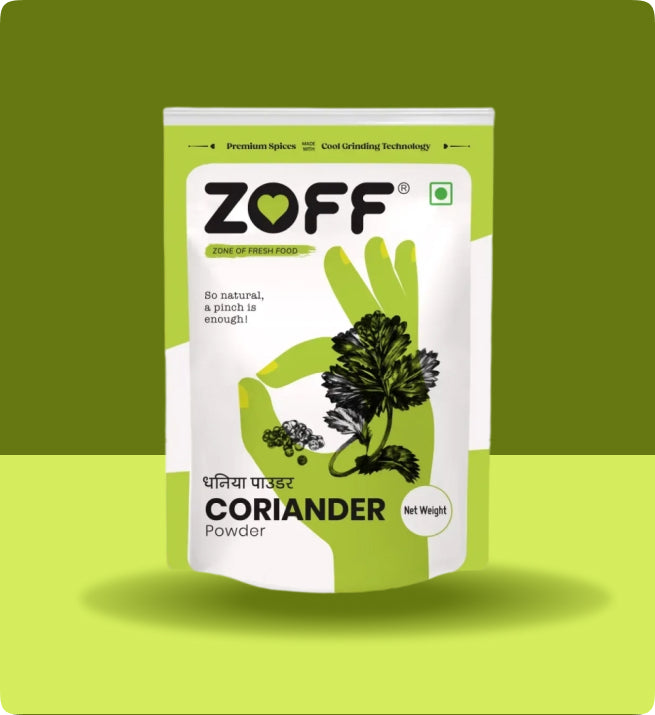
 Sold out