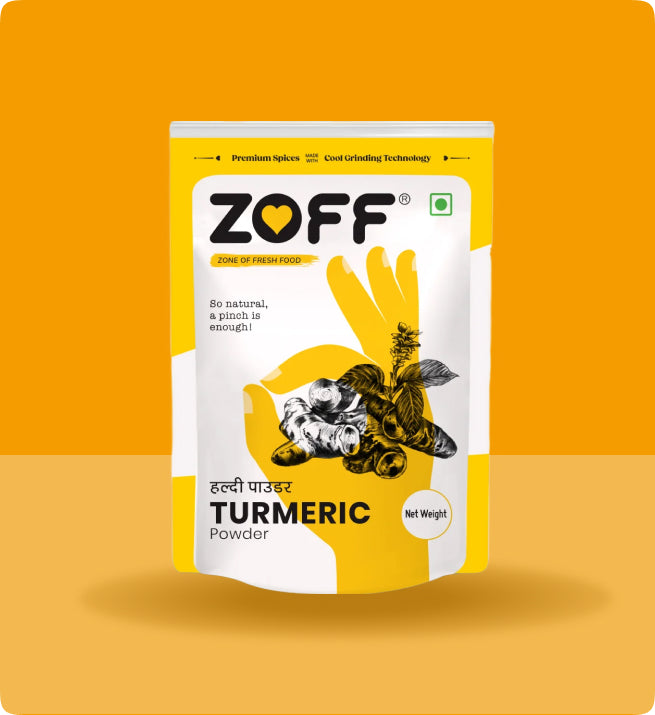
Turmeric powder is the one spice that sits in every Indian kitchen, used every single day, and still rarely thought about. A pinch goes into the dal, a quarter teaspoon into the sabji, a dusting into the egg bhurji. Most cooks add it on autopilot, the same way they add salt.
But not all turmeric powder is the same. The bright yellow colour, the earthy aroma, the curcumin content that carries most of the health benefits, all of these depend on two things: the quality of the root and the way it is ground. A turmeric powder that has been processed at high temperatures can lose a significant portion of the very compounds that make turmeric valuable.
Here is what turmeric powder actually does, how to use it beyond the basic curry, and why the grinding process matters more than most people realise.
Key Takeaways
- Curcumin, the main active compound in turmeric powder, has anti-inflammatory and antioxidant properties backed by a growing body of research.
- Turmeric is poorly absorbed on its own. Pairing it with black pepper (piperine) and a source of fat significantly improves absorption.
- High-temperature grinding (above 60°C) degrades the volatile oils and curcumin in turmeric. Low-temperature grinding preserves them.
- For cooking, ¼ to ½ teaspoon per day is a safe, commonly used amount.
What Is Turmeric Powder?
Turmeric powder is made by drying and grinding the rhizome (underground stem) of the Curcuma longa plant, a member of the ginger family native to Southeast Asia and cultivated in India for thousands of years.
The powder gets its deep golden colour from curcumin, a polyphenol that makes up about 2 to 5% of turmeric by weight. Curcumin is the compound behind most of the health research on turmeric. The root also contains other curcuminoids, volatile oils, fibre, and minerals.
Benefits of Turmeric Powder
The research on turmeric is growing, though most findings are still from small or lab-based studies. Here is what the evidence suggests so far.
May Support Joint Comfort
Multiple clinical trials have examined curcumin for knee osteoarthritis. Some found that it may help reduce pain and improve mobility, performing comparably to standard anti-inflammatory medication in certain studies. For people with mild joint stiffness, regular turmeric use alongside a balanced diet may offer supportive benefit.
May Help with Digestion
Turmeric is traditionally valued as a digestive aid in Indian households. Some clinical evidence suggests curcumin may help ease indigestion and bloating. Turmeric may also support liver health by helping reduce fat accumulation, based on trials involving people with non-alcoholic fatty liver conditions.
May Benefit Skin Health
Curcumin has antioxidant and anti-inflammatory properties that may benefit the skin. A systematic review of clinical studies found some improvement in conditions like acne and photoaging when turmeric products were used. Traditional use includes haldi face packs and ubtan, valued for their perceived brightening effect.
May Support Heart Health
Curcumin may help manage certain risk factors linked to heart disease, including triglyceride levels and endothelial function (the health of blood vessel linings). The evidence on cholesterol is mixed, and turmeric is not a substitute for prescribed heart medication.
Traditionally Valued for Immunity
Haldi doodh (turmeric milk) has been a go-to home remedy during seasonal changes for generations. While curcumin shows antioxidant activity that may support the body's natural defences, there is no clinical evidence that turmeric "boosts" immunity in the way popular claims suggest.
Everyday Uses of Turmeric Powder
Beyond the standard curry, turmeric fits into several daily routines.
-
In cooking: A ¼ to ½ teaspoon in dal, sabji, rice, eggs, or marinades. The most common and simplest way to get turmeric into your diet consistently.
-
Golden milk (haldi doodh): Warm milk with a pinch of turmeric, black pepper, and honey. A traditional evening drink during cold and flu season.
-
Turmeric tea: Simmer turmeric with ginger, lemon, and black pepper in water for a warming morning drink.
-
Face masks: Mix turmeric with yoghurt or honey, apply for 15 minutes, and rinse. A traditional skin care practice across India, though results vary by individual.
-
Smoothies: A ½ teaspoon blended with banana, mango, and coconut milk adds colour and earthiness.
How to Improve Absorption
Curcumin is fat-soluble and poorly absorbed on its own. Two habits help:
-
Add black pepper: Piperine, the compound in black pepper, has been shown to improve curcumin absorption significantly. A pinch in your dal, curry, or golden milk makes a real difference.
-
Cook with fat: Ghee, oil, or coconut milk all help the body absorb more curcumin. A dry sprinkle of turmeric on a salad delivers less benefit than turmeric cooked into a tadka with oil.
Why Grinding Quality Matters
Most turmeric discussions skip the grinding step. But the way turmeric is ground directly affects how much curcumin and volatile oil you actually get in the powder.
What Happens During Conventional Grinding
Most commercial spice mills use hammer mills that operate at high speeds. The friction generates heat often exceeding 100 to 120°C. At those temperatures, the volatile oils in turmeric begin to evaporate. Curcumin, while more heat-stable, can also degrade under prolonged high temperatures.
The result is a powder that looks yellow but smells faint, tastes flat, and delivers less of the active compounds. Research on spice grinding has shown volatile oil losses of up to 40% in coriander and 37% in nutmeg at conventional temperatures. Turmeric follows the same pattern.
What Low-Temperature Grinding Changes
Grinding 60 °C below the threshold where significant flavour degradation begins preserves the volatile oils, the curcumin, and the natural colour of the turmeric. The powder smells stronger, tastes more aromatic, and retains more of the bioactive compounds that carry the health benefits.
For the home cook, the practical difference is noticeable. A turmeric powder ground at low temperatures will colour a dish more vividly, smell distinctly earthy when the packet is opened, and contribute a richer flavour profile than a heat-processed equivalent.
How to Choose and Store Turmeric Powder
-
Check the colour: Good turmeric powder has a deep, uniform golden-yellow colour. Dull or brownish powder may be old or processed at high heat.
-
Smell it: Fresh turmeric powder has a warm, earthy, slightly peppery aroma. If it smells like nothing, it has lost its volatile oils.
-
Read the label: Look for an FSSAI licence number, batch date, and clear sourcing information. Avoid unlabelled loose powder where quality is unverifiable.
-
Store in an airtight container: Away from heat, light, and moisture. Use within 2 to 3 months of opening for the best flavour and potency.
Conclusion
Turmeric powder is one of the most used spices in India, but its value depends on what survives the grinding process. The curcumin, the volatile oils, the colour, and the aroma are all sensitive to heat. A powder processed at low temperatures delivers more of what makes turmeric worth using in the first place.
ZOFF (Zone of Fresh Foods) grinds its turmeric powder using cool grinding technology, keeping the processing temperature below 60°C. Conventional mills reach up to 120°C, which can degrade the volatile oils and curcumin that carry the flavour and benefits. ZOFF's zip-lock packaging then keeps the powder fresh, aromatic, and protected from moisture. Explore the full range of powdered spices at our zofffoods.com.
Explore Other Blogs
Indian Spice Blends|One Pot Indian Dinners|15 Minute Indian Recipes|Rainy Season Foods|Bhel Puri
Disclaimer: The information in this blog is for general informational purposes gathered from various sources. Zoff Foods does not guarantee specific health or nutritional outcomes. Please consult a qualified health professional for personalised dietary advice.


 Sold out
 Sold out
 Sold out