Every restaurant-style tandoori chicken, butter chicken, and rogan josh you have ever admired for its deep red colour owes that colour to one spice: Kashmiri chilli powder. Not regular red chilli. Not food colouring. Not paprika. The vivid, appetising red that defines North Indian restaurant food comes from a specific variety of chilli grown in the cooler regions of India, prized almost entirely for what it looks like rather than how much it burns.
The problem is that genuine Kashmiri chilli powder is not always easy to find. The demand is high, the supply is limited, and the market is full of blends labelled "Kashmiri" that are actually regular chillies mixed with colour or paprika. Knowing what the real thing looks, smells, and tastes like is the first step to using it well.
Key Takeaways
- Kashmiri chilli powder provides deep red colour with very mild heat, roughly 1,000 to 2,000 Scoville Heat Units (SHU).
- The colour comes from the chilli itself, not from added dye. Genuine Kashmiri chilli has a naturally high pigment content.
- Common uses: tandoori dishes, butter chicken, rogan josh, biryani, gravies, and any recipe where colour matters more than heat.
- Adulteration is widespread. Many products labelled "Kashmiri" contain regular chillies with artificial colour. A simple water test can help identify fakes.
What Is Kashmiri Chilli?
Kashmiri chilli refers to a specific variety of red chilli (Capsicum annuum) traditionally grown in the Kashmir Valley and parts of Himachal Pradesh. The chillies are longer and thinner than most common Indian varieties, with a deep red skin that dries to a vibrant crimson.
What makes the variety distinctive is its pigment-to-heat ratio. Kashmiri chillies have an unusually high concentration of natural red pigment (capsanthin and capsorubin) relative to capsaicin (the compound that causes heat). The result is a spice that colours food deep red without making it painfully spicy.
Heat Level: How Kashmiri Chilli Compares
On the Scoville scale, Kashmiri chilli powder registers roughly 1,000 to 2,000 SHU. For context:
-
Regular red chilli powder (lal mirch): 15,000 to 30,000 SHU
- Guntur chilli powder: 35,000 to 40,000+ SHU
- Cayenne pepper: 30,000 to 50,000 SHU
- Bell pepper (capsicum): 0 SHU
At 1,000 to 2,000 SHU, Kashmiri chilli is one of the mildest chilli powders available. You can add a generous tablespoon to a dish without worrying about overwhelming heat. A person who finds regular chilli powder too spicy can use Kashmiri chilli powder comfortably.
Uses in Indian Cooking
Kashmiri chilli powder earns its place in the kitchen by solving a specific problem: how to make food look vibrant and appetising without making it excessively hot. Here is where it works best:
-
Tandoori dishes: Tandoori chicken, paneer tikka, and fish tikka get their iconic red from Kashmiri chilli. No other chilli gives you the same colour at the same mild heat.
-
Butter chicken and paneer makhani: The rich, red-orange gravy relies on Kashmiri chilli for colour. Regular chilli would make the dish far too spicy for the creamy, mild profile these dishes are known for.
-
Rogan josh: One of the signature dishes of Kashmiri cuisine itself. The deep red oil that floats on top is achieved through generous use of Kashmiri chilli.
-
Biryani and biryani masala blends: Kashmiri chilli adds warmth and colour to the marinade without overpowering the delicate aromatics of cardamom and mace.
-
Spice blends: Many garam masala and biryani masala formulations include Kashmiri chilli specifically for its colour contribution.
-
Gravies for children and elders: When cooking for family members who prefer mild food, Kashmiri chilli lets you serve a visually appealing dish without the heat.
-
Restaurant-style colour mixing: Many professional kitchens use a 2:1 ratio of Kashmiri to regular chilli. The Kashmiri handles the colour, the regular handles the heat, and the dish gets both.
How to Buy the Real Thing
Adulteration of Kashmiri chilli powder is a known problem in India. The demand for the vibrant red colour, combined with limited genuine supply, creates an incentive to sell regular chilli powder blended with artificial colour and label it "Kashmiri." Here is how to evaluate what you are buying.
Check the Label
A genuine Kashmiri chilli powder should list "Kashmiri red chillies" or "Kashmiri mirch" as the sole or primary ingredient. If the ingredient list says "red chillies" without specifying the Kashmiri variety, or includes "permitted food colour" or "nature-identical flavouring," the product is likely a blend or a substitute.
Look for an FSSAI licence number, a clear manufacturing date, and a batch code. Brands that provide traceable sourcing information are generally more reliable than those that do not.
Do the Water Test
Sprinkle a pinch of the powder on the surface of a glass of cold water. Genuine chilli powder floats briefly, then slowly sinks, leaving the water lightly tinted. Artificial colour dissolves immediately, leaving bright red streaks. While not foolproof, this test catches the most common form of adulteration.
Evaluate the Colour and Smell
Genuine Kashmiri chilli has a deep, warm red colour, not neon orange or unnaturally bright. The aroma should be mildly smoky and earthy, not sharp or acrid. If the colour looks too vivid to be natural, or if the powder smells primarily of generic chilli heat, question the label.
Be Wary of Very Low Prices
Kashmiri chilli is a premium variety. Genuine Kashmiri chilli powder typically costs more than standard red chilli powder because the variety has lower yields and limited growing regions.
Kashmiri Chilli Powder Price: What to Expect
The Kashmiri chilli powder price varies by brand, pack size, and purity. As a rough guide for 2026:
-
Budget / blended products: ₹15 to ₹25 per 100g. Often a mix of regular chillies with added colour.
-
Mid-range / branded: ₹30 to ₹50 per 100g. Genuine Kashmiri variety, properly labelled and FSSAI-compliant.
-
Premium / single-origin: ₹50 to ₹80+ per 100g. Traceable sourcing, processed at low temperatures to preserve pigment.
If a product claims to be Kashmiri chilli powder but is priced identically to regular red chilli powder, evaluate carefully. Genuine Kashmiri chilli is not a cheap spice.
How to Store Kashmiri Chilli Powder
The pigment that gives Kashmiri chilli its colour degrades with exposure to light, heat, and air. Proper storage preserves both the colour and the mild flavour.
-
Airtight container or resealable pouch: Air exposure oxidises the pigments and dulls the colour over time.
-
Cool, dark place: Direct sunlight is the fastest way to fade the red. A cupboard or pantry shelf is ideal.
-
Use within 2 to 3 months of opening: The colour and aroma are strongest when the powder is fresh. After 3 months, the red starts to shift toward a duller brownish tone.
Conclusion
Kashmiri chilli powder is a colour spice first and a heat spice second. Its value lies in giving food the deep, appetising red that no regular chilli, paprika, or food colouring can replicate naturally. Knowing what to look for on the label, what it should smell and taste like, and what it should cost helps you avoid the blended substitutes that flood the market.
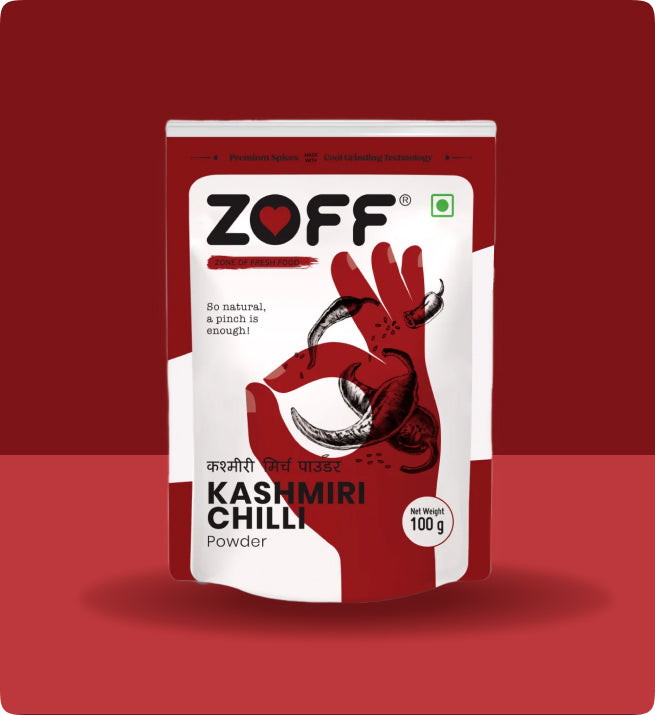
ZOFF (Zone of Fresh Foods) offers Kashmiri Chilli Powder, ground fresh using cool grinding technology below 60°C, preserving the natural capsanthin pigment that gives it its deep red colour. The resealable zip-lock pouch keeps the powder fresh between uses. Explore the full powdered spices range at zofffoods.com.
Explore Other Blogs
Indian Spice Blends|One Pot Indian Dinners|15 Minute Indian Recipes|Rainy Season Foods|Bhel Puri
Disclaimer: The information in this blog is for general informational purposes gathered from various sources. Zoff Foods does not guarantee specific health or nutritional outcomes. Please consult a qualified health professional for personalised dietary advice.
Z
ABOUT THE AUTHOR
ZOFF Foods
ZOFF Foods is built on the belief that great taste starts with great ingredients. With cool grinding technology and a focus on freshness, ZOFF brings authentic Indian flavours to every kitchen.
Cool-groundFresh spicesIndian flavours


 Sold out
 Sold out