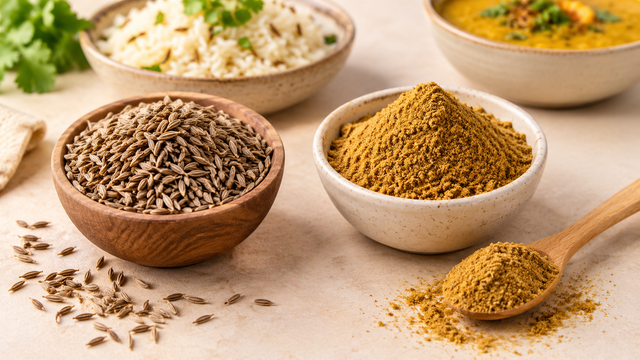








After a heavy Sunday lunch of rajma-chawal, most Indian families reach for the same thing: a pinch of saunf from the small steel bowl by the door. Others swear by warm jeera water. These habits came from kitchens, not laboratories. Some now have modest research support; many haven't been properly tested. This guide separates the two.
Indian spices commonly associated with digestion include cumin (jeera), fennel (saunf), carom seeds (ajwain), ginger, coriander and asafoetida (hing). These spices have traditionally been used to support digestive comfort and add flavour to meals. Ginger has some clinical evidence for relieving certain types of nausea, while evidence for many other digestive claims remains limited.
The 10 Indian Spices for Digestion
1. Cumin (Jeera)
Cumin's warm aroma comes mainly from cuminaldehyde. It anchors almost every tadka and is the base of jeera water. In a 2013 pilot study of 57 people with IBS, cumin oil drops were linked to less bloating and pain, but there was no placebo group. Whole cumin seeds release the most flavour when crackled in hot ghee.
2. Fennel (Saunf)
Fennel's sweet, liquorice-like note comes from anethole. It is the classic after-meal mukhwas. Human evidence for digestive benefits comes mostly from small trials. ZOFF Fennel Seeds taste best lightly roasted. Read more in our fennel seeds benefits guide.
3. Carom Seeds (Ajwain)
Ajwain is rich in thymol, which gives it a sharp, thyme-like bite. It's traditionally added to pakoras, parathas and besan dishes that feel heavy. Most research is in animals, so treat gas-relief claims as traditional rather than proven. Rub ajwain between your palms before adding it to dough.
4. Ginger (Adrak / Saunth)
Ginger has the strongest evidence here, specifically for nausea. Its gingerols and shogaols have been tested in over 100 randomised trials, though a 2020 review rated only 39% as high quality. Reviews support benefit for pregnancy-related and post-surgery nausea. This suits chai, laddoos and winter kadha.
5. Coriander Seeds (Dhaniya)
Coriander seeds contain linalool, a gentle citrusy compound. They form the bulk of most masalas and are soaked overnight for dhaniya water. Human research on digestion is sparse. Dry-roast coriander seeds and grind fresh for fuller aroma.
6. Asafoetida (Hing)
A pinch of hing goes into dal, chole and rajma, traditionally to make legumes easier on the stomach. Its sulphur compounds mellow quickly in hot oil. Clinical evidence remains limited. Bloom hing in fat for a few seconds; never add it raw.
7. Black Pepper (Kali Mirch)
Piperine gives pepper its heat. Animal studies suggest it may stimulate digestive enzymes, but human data are thin. It's central to rasam.
8. Turmeric (Haldi)
A 2022 systematic review found curcumin and turmeric preparations may ease IBS-related abdominal pain. Those studies used concentrated extracts, not the half-teaspoon in your dal.
9. Cardamom (Elaichi)
Cardamom's floral, cooling aroma comes from cineole. It's chewed after meals and steeped in chai. Evidence for digestive benefit is largely traditional.
10. Fenugreek Seeds (Methi Dana)
Methi seeds are rich in soluble fibre, which supports regular bowel movements. They're tempered in kadhi, sambar and pickles, and roasting softens their bitterness.
Comparison Table: Indian Spices for Digestive Health
|
Spice |
Potential benefit |
Common use |
Precaution |
|---|---|---|---|
|
Jeera |
May ease bloating (small studies) |
Tadka, jeera water |
Generally well tolerated |
|
Saunf |
Traditional after-meal freshener |
Mukhwas, curries |
Limited human evidence |
|
Ajwain |
Traditional gas relief |
Parathas, pakoras |
Strong; use sparingly |
|
Ginger |
Nausea relief (best evidence) |
Tea, curries |
Large amounts may cause heartburn |
|
Dhaniya |
Mild traditional digestive |
Masalas, dhaniya water |
Generally well tolerated |
|
Hing |
Traditional for legumes |
Dal, chole |
Compounded hing may contain wheat |
|
Kali mirch |
May stimulate enzymes (animal data) |
Rasam, raita |
Can irritate with acidity |
|
Haldi |
Extracts studied for IBS pain |
Dal, sabzi |
Supplements need medical advice |
|
Elaichi |
Traditional freshener |
Chai, desserts |
Generally well tolerated |
|
Methi |
Fibre for regularity |
Kadhi, sambar |
May cause gas initially |
How to Include Digestive Spices Daily: The 3-Touchpoint Method
Attach spices to moments you already have:
- Morning: Jeera water. Soak 1 tsp cumin overnight, boil, strain and sip warm.
- Cooking: Add hing and ajwain to legume and besan dishes; temper jeera in your dal.
- After meals: Chew ½ tsp saunf, or sip ginger tea made with fresh adrak or a pinch of saunth.
Start with one touchpoint for two weeks and notice how you feel before adding another. Explore our whole spices collection to stock the basics.
Safety: When Spices May Aggravate Digestion
Spices are not a treatment for acidity, IBS, ulcers or GERD. If you get frequent heartburn, chilli, black pepper and large amounts of raw ginger or garlic can make it worse. Pregnant women, people on blood thinners and anyone taking spice supplements should consult a doctor first. Persistent bloating, pain or changes in bowel habits need medical evaluation, not a home remedy.
Explore Other Blogs
Indian Spices List|Indian Spice Blends|Beginner Spices|Spice Routes|Inflammation Spices
Disclaimer: The information in this blog is for general informational purposes gathered from various sources. Zoff Foods does not guarantee specific health or nutritional outcomes. Please consult a qualified health professional for personalised dietary advice.

Frequently asked
Which Indian spices are best for digestion?
Cumin, fennel, ajwain, ginger, coriander and hing are the most commonly used. Ginger has the most clinical evidence, mainly for nausea; the others rely largely on traditional use and small studies.
Does jeera help with digestion and bloating?
Jeera is traditionally used for bloating, and a small 2013 study in people with IBS reported less bloating with cumin oil. It had no placebo group, so the evidence is preliminary.
Is ajwain beneficial for gas and indigestion?
Ajwain is a popular home remedy for gas, linked to its thymol content. Most supporting research is in animals, so human evidence remains limited.
Can eating saunf after meals improve digestion?
Chewing saunf after meals is a long-standing habit that freshens breath and may feel soothing. Strong clinical proof that it improves digestion is lacking.
Is ginger helpful for nausea and digestive discomfort?
Yes, for some types. Systematic reviews support ginger for pregnancy-related and post-operative nausea, though study quality varies.
Which spices should you avoid if you have acidity?
Red chilli, black pepper and large amounts of ginger or garlic can trigger heartburn in some people. Coriander, fennel and cardamom are usually better tolerated.
How can you include digestive spices in your daily diet?
Use three moments: jeera water in the morning, hing and ajwain while cooking, and saunf or ginger tea after meals.