







Chicken Chettinad is a dark, peppery chicken curry from the Chettinad region of Tamil Nadu, a cluster of about 76 villages that was once home to the Chettiar trading community. Those traders brought back spices from their sea routes, and the dish still reflects that: it leans on roasted whole spices, black pepper and curry leaves rather than cream or butter.
Most people meet it in a restaurant and assume it is too much work for a weeknight. It is not. Once you understand which spices do what, the authentic chicken chettinad recipe comes down to one roast, one grind and about 35 minutes at the stove. This guide covers the ingredients, the method, the nutrition and the mistakes worth avoiding when you make chicken chettinad at home.
The Spices that give Chicken Chettinad its Bold Flavour
Three things separate chettinad chicken masala from a regular chicken curry: the spices are dry-roasted before grinding, black pepper carries most of the heat, and curry leaves go in at two stages. Skip any one and the dish tastes flat.
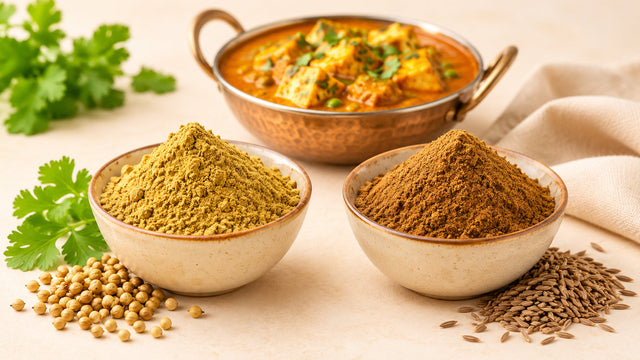
Roasted whole spices. Dry roasting for 2-3 minutes on low heat drives moisture out of the seeds and wakes up their volatile oils. Fennel turns sweeter, coriander turns nutty, and the mix grinds into a smoother paste. Roast spices in the order below so nothing burns.
Black pepper. Chettinad cooks reach for pepper before chilli. Two teaspoons of whole peppercorns for 500 g chicken give a slow, warm heat that builds instead of hitting at once. Dried red chilli adds colour and a sharper top note.
Curry leaves. A sprig goes into the roast for a toasted, earthy base, and a second sprig is fried in oil at the start of cooking for aroma. There is no substitute that works well, so plan for 20–25 fresh leaves.
Quantities below serve 4 (500 g chicken).
|
Chicken Chettinad Spices |
Quantity |
|---|---|
|
Black peppercorns |
2 tsp |
|
Dried red chillies |
4–5 |
|
Coriander seeds |
1 tbsp |
|
Fennel seeds |
1 tsp |
|
1 tsp |
|
|
1 inch, 3, 2 |
|
|
1 |
|
|
Grated coconut |
2 tbsp |
|
Poppy seeds (khus khus) |
1 tsp |
|
Curry leaves |
2 sprigs (20–25 leaves) |
Freshness matters more here than in most curries because the spices are the gravy. Whole spices hold their oils far longer than powders, which is why a single pack of ZOFF whole spices will outlast several packs of ready powder on the shelf.
Nutrition
A home-cooked serving (one-fourth of the recipe below, roughly 200 g) comes to about 310–330 kcal, with 25–28 g protein, 18–20 g fat and 8–10 g carbohydrate. The numbers move with two choices: skinless breast cuts the fat by around a third, and coconut milk instead of grated coconut adds 20-30 kcal per serving.
Because the gravy is built on roasted spices and onion rather than cream, it is one of the lighter restaurant-style chicken curries. Pepper, cumin and fennel are all traditional digestive spices in South Indian cooking, which is one reason the dish is served with plain rice rather than richer breads. Figures are approximate and depend on the oil, cut and coconut used.
How to make Chicken Chettinad
Prep 20 min · Cook 35 min · Total 55 min
Chicken Chettinad Ingredients (Serves 4)
- 500 g chicken, bone-in curry cut (thigh and leg hold up best)
- Marinade: ½ tsp turmeric, 1 tsp red chilli powder, 1 tbsp curd or juice of ½ lemon, ½ tsp salt
- Chettinad masala: all spices from the table above
- 3 tbsp oil (gingelly/sesame oil is traditional; any neutral oil works)
- 2 medium onions, finely sliced
- 2 medium tomatoes, chopped
- 1 tbsp ginger-garlic paste
- 1 sprig curry leaves for tempering
- 1 cup water, salt to taste
- 2 tbsp chopped coriander leaves
Method
- Marinate the chicken with turmeric, chilli powder, curd and salt. Rest 30 minutes (or 2 hours in the fridge for deeper flavour).
- Dry roast the masala on low heat: coriander, cumin and fennel first (1 minute), then peppercorns, chillies, cinnamon, cloves, cardamom and star anise (1 minute), then one sprig of curry leaves and the coconut last (30-45 seconds, until the coconut is pale gold). Cool fully.
- Grind to a smooth paste with poppy seeds and 3-4 tbsp water. A coarse grind gives a gritty gravy, so run the mixer longer than feels necessary.
- Heat oil in a kadai. Fry the second sprig of curry leaves for 10 seconds, add onions and cook until deep golden, about 8 minutes. Add ginger-garlic paste and cook 1 minute.
- Add tomatoes and salt. Cook until they break down and the oil separates, 4–5 minutes.
- Add the ground masala. Sauté 5-6 minutes, scraping the base, until it darkens and smells toasted rather than raw.
- Add the chicken. Sear on high for 3-4 minutes so the pieces take on colour.
- Add 1 cup water, cover and simmer on low for 15–18 minutes. The chicken is done when the thickest piece reads 75°C or the juices run clear.
- Uncover and reduce for 3–4 minutes for a thick, dark chettinad chicken gravy. Finish with coriander leaves.
Short on time? ZOFF 1-Minute Chicken Chettinad Marinade Mix replaces steps 1-3: marinate, then start from step 4. The spice balance is pre-set, so the dish stays consistent even on a rushed weekday.
Tips to Follow
- Roast on low, not medium: Pepper and fennel scorch within seconds on a hot pan, and burnt pepper turns the whole gravy bitter. If a spice smokes, start that batch again.
- Cool before grinding: Warm spices release steam in the jar and the paste turns gummy.
- Cook the masala until the oil shows: This is the step most home cooks rush. Five to six minutes of sautéing is what gives the gravy its dark colour and takes away the raw spice edge.
- Hold back on tomato: Two medium tomatoes are enough. More makes the gravy sour and red instead of dark and peppery.
- Let it rest: Chicken Chettinad tastes noticeably better after 20 minutes off the heat, and better again the next day.
- Adjust heat with pepper, not chilli: Want it milder? Drop to 1½ tsp peppercorns and keep the chillies. The character stays, the burn drops.
Serving Suggestions
The gravy is thick and intense, so pair it with something plain. Steamed rice is the everyday choice in Tamil homes. Kerala parotta or appam work well when you want to mop up the gravy, and idli or dosa turn leftovers into a strong breakfast. A boiled egg on the side and a spoon of curd or thin raita balance the pepper. For a dry version suited to starters, skip the water in step 8 and cook uncovered until the masala coats the chicken.
Explore Other Blogs
Tandoori Chicken|Chicken Curry|Tandoori Chicken vs Chicken Tikka|Butter Chicken|Chicken Tikka
The core chicken chettinad spices are black peppercorns, dried red chillies, coriander, fennel, cumin, cinnamon, cloves, cardamom, star anise and curry leaves, roasted and ground with grated coconut and poppy seeds. For 500 g chicken, use 2 tsp peppercorns, 1 tbsp coriander seeds and 1 tsp each of fennel and cumin.
3. Can I make Chicken Chettinad without coconut?
Yes. Replace 2 tbsp grated coconut with 6 cashews or 1 tbsp roasted chana dal for thickness. The gravy stays dark and peppery but loses a little sweetness.
4. Is Chicken Chettinad very spicy?
It is hot but the heat comes mostly from black pepper, which builds slowly. Reduce peppercorns from 2 tsp to 1½ tsp for a medium version without changing the flavour profile.
5. How many calories are in a serving of Chicken Chettinad?
A 200 g home-cooked serving has approximately 310–330 kcal and 25–28 g protein, depending on the cut of chicken and the amount of oil and coconut used.
6. What is the best cut of chicken for Chettinad gravy?
Bone-in thigh and leg pieces. They stay juicy through the 15–18 minute simmer and release collagen that thickens the gravy. Breast dries out unless the simmer is cut to 10 minutes.
ABOUT THE AUTHOR
ZOFF Foods is built on the belief that great taste starts with great ingredients. With cool grinding technology and a focus on freshness, ZOFF brings authentic Indian flavours to every kitchen.

Used in this recipe
Chicken Chettinad Marinade
Bold South Indian flavour in a one-minute marinade.