






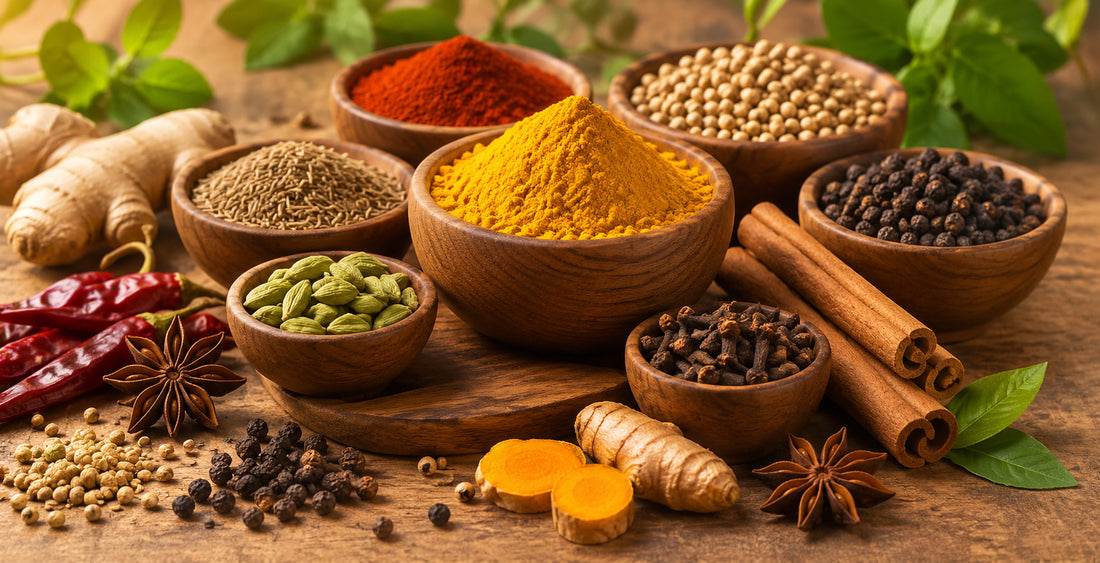
Walk into any Indian kitchen and the first sound is often jeera crackling in hot ghee. Spices were never just flavour here: grandmothers reached for haldi when we coughed and ajwain when the stomach protested. Science is now testing those habits. Some hold up in human trials, some only in the lab, and some not yet. This guide separates the three.
Indian spices such as turmeric, cumin, coriander, cinnamon, ginger and black pepper contain plant compounds, including polyphenols and other antioxidants. Research suggests some may have antioxidant or anti-inflammatory effects. Real-world benefits depend on the spice, the quantity and your overall diet, and should not be confused with concentrated supplements.
How to Read the Evidence
Each benefit carries one label: Human trials (randomised studies), Population data (observational, shows association), or Lab/Traditional (test-tube, animal or long-standing use).
11 Health Benefits of Indian Spices
1. Among the most antioxidant-dense foods (Lab). A 2010 Nutrition Journal analysis of 3,100+ foods found spices and herbs were among the richest in antioxidants. Lab scores don't translate directly into effects in the body.
2. Turmeric may ease inflammation (Human trials). Meta-analyses of knee-osteoarthritis trials link curcuminoid supplements to lower pain. Those trials used extracts, far above the turmeric in a bowl of dal.
3. Black pepper boosts turmeric absorption (Human trials). In a 1998 Planta Medica study, 20 mg piperine taken with 2 g curcumin raised curcumin bioavailability by 2,000%. The haldi-plus-kali-mirch tadka has a basis. See ZOFF Black Pepper.
4. Cinnamon may support blood sugar (Human trials). A 2019 meta-analysis of 16 trials found cinnamon lowered fasting blood glucose in type 2 diabetes and prediabetes, with high variation between studies. It complements medication; never replaces it.
5. Ginger can settle nausea (Human trials). A 2014 meta-analysis of 12 trials with 1,278 pregnant women found ginger improved nausea versus placebo, though not vomiting.
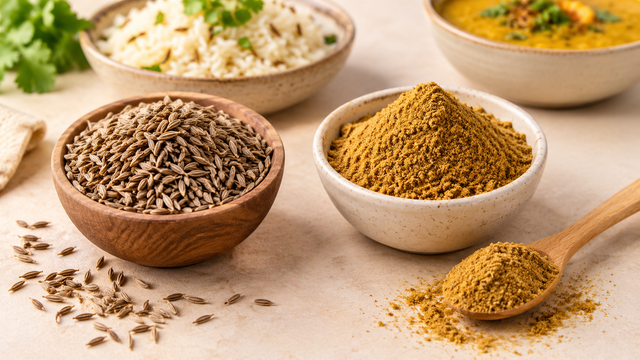
6. Cumin supplies iron (Nutrition data). USDA data puts cumin seeds at about 66 mg iron per 100 g, roughly 1.3 mg per teaspoon. Pair with lemon or amchur, as vitamin C improves absorption. See ZOFF Cumin Seeds.
7. Regular spicy food is linked with longer life (Population data). A 2015 BMJ study of 487,375 adults found those eating spicy food 6–7 days a week had a 14% lower relative risk of death than those eating it less than weekly. Association, not proof.
8. Cumin, fennel and ajwain aid digestion (Traditional). Early studies suggest cumin may stimulate digestive enzymes; saunf after meals is centuries old. Read our guide to spices for digestion.
9. Coriander adds fibre and minerals (Nutrition data). Coriander seeds provide fibre, calcium and aromatic linalool. Blood-sugar findings are mostly from animal studies. See ZOFF Coriander Powder.
10. Spices help cut salt and sugar (Practical). Bold flavour from hing, jeera or cinnamon makes food satisfying with less salt or sugar, useful for anyone watching blood pressure.
11. Some spices resist microbes (Lab). Eugenol in clove and cinnamaldehyde in cinnamon inhibit certain bacteria in lab tests, one reason they feature in traditional preservation.
Spice Comparison Table
|
Spice |
Key compounds |
Potential benefit (evidence) |
Culinary uses |
|---|---|---|---|
|
Turmeric |
Curcumin |
Inflammation (human trials, supplements) |
Dal, sabzi, haldi doodh |
|
Black pepper |
Piperine |
Curcumin absorption (human trial) |
Rasam, tadka |
|
Cumin |
Cuminaldehyde, iron |
Iron, digestion (nutrition data, early studies) |
Jeera rice, raita |
|
Coriander |
Linalool, fibre |
Digestion (traditional) |
Curries, chutneys |
|
Cinnamon |
Cinnamaldehyde |
Fasting glucose (human trials, supplements) |
Biryani, chai, kheer |
|
Ginger |
Gingerols |
Nausea (human trials) |
Chai, curries |
|
Clove |
Eugenol |
Antioxidant, antimicrobial (lab) |
Pulao, garam masala |
Everyday Uses: The 3-Step TAP Method
- Temper in fat: curcumin is fat-soluble, so bloom turmeric in ghee or oil.
- Add pepper: a pinch of black pepper wherever turmeric goes.
- Pair cumin with vitamin C: finish jeera aloo or chana with lemon.
Buy whole spices and grind small batches; store powders airtight, away from heat. Explore Indian spice blends and haldi milk for more ideas.
Safety Considerations
Culinary amounts are generally safe for most people. Supplements differ: high-dose curcumin may interact with blood thinners, and cassia cinnamon contains coumarin, which is best limited in large daily amounts. Pregnant women and people on medication should consult a doctor. Choose FSSAI-licensed brands to reduce adulteration risk.
Explore Other Blogs
Indian Spices List|Spices for Beginners|Spices Combos|Collection Page
Disclaimer: The information in this blog is for general informational purposes gathered from various sources. Zoff Foods does not guarantee specific health or nutritional outcomes. Please consult a qualified health professional for personalised dietary advice.
Frequently asked
What are the main health benefits of Indian spices?
Indian spices provide antioxidants and bioactive compounds. Human trials support ginger for nausea, and curcumin and cinnamon supplements for joint pain and fasting glucose. Most other benefits rest on lab or population data.
Which Indian spices contain antioxidants?
Clove, cinnamon, turmeric, black pepper, cumin, coriander and ginger all contain antioxidant compounds such as polyphenols, eugenol and curcumin.
Can eating spices every day support overall health?
Daily spices add antioxidants, flavour and small amounts of minerals, and can reduce reliance on salt. They support a balanced diet but don't replace one.
What are the benefits of turmeric, cumin and coriander?
Turmeric's curcumin is studied for inflammation; cumin is iron-rich and may aid digestion; coriander adds fibre and is traditionally used for digestion.
Are whole spices healthier than powdered spices?
Nutritionally similar. Whole spices keep aromatic oils longer, so grinding fresh preserves more flavour and volatile compounds.
Do spices lose their nutritional properties during cooking?
Some volatile compounds reduce with long, high heat, but minerals remain. Brief tempering in fat can improve curcumin absorption.
How much spice should you consume daily?
There is no official daily limit. Typical Indian cooking uses ½–2 teaspoons per dish, which is considered safe. Higher, supplement-level doses need medical advice.