
Most Indian breakfasts are built around carbs. Poha, upma, aloo paratha, bread-butter: comforting, quick, and usually light on protein. That matters because the ICMR-NIN Dietary Guidelines for Indians (2024) set the protein RDA at 0.83 g per kg of body weight, about 54 g a day for a 65 kg adult, while the estimated average Indian intake is closer to 0.66 g/kg.
The gap shows up in surveys too. An IMRB study across seven cities found 73% of urban respondents were protein deficient, and 93% didn't know how much protein they needed. Breakfast is the easiest meal to fix first.
The Anchor Booster Base Framework
You don't need a protein shake. Run any breakfast plate through this three-part check:
- Anchor (12-20 g): one main protein: paneer, soya, eggs, besan, moong dal or sprouts.
- Booster (4-8 g): a side that adds more: curd, milk, peanuts, roasted chana or seeds.
- Base (3-6 g): a whole-grain carrier: multigrain roti, oats, millet or poha.
Anchor + booster + base gets most people to 20–30 g. ICMR-NIN also notes that combining cereals and pulses in roughly a 3:1 ratio improves protein quality, which is exactly what a chilla with roti or a moong dal dosa does.
Comparison Table: 15 High-Protein Indian Breakfasts
|
Breakfast |
Serving size |
Protein (approx.) |
|---|---|---|
|
Soya chunk bhurji + roti |
40 g dry soya + 1 multigrain roti |
24 g |
|
Egg bhurji + roti |
3 eggs + 1 roti |
22 g |
|
Paneer bhurji + toast |
100 g paneer + 1 multigrain slice |
21 g |
|
Paneer paratha |
2 parathas (60 g atta + 80 g paneer) |
21 g |
|
Masala omelette + paneer |
2 eggs + 30 g paneer + 1 toast |
20 g |
|
Hung curd bowl |
200 g hung curd + 15 g seeds + fruit |
20 g |
|
Soya upma |
50 g rava + 25 g soya granules + 10 g peanuts |
20 g |
|
Stuffed besan chilla |
2 chillas (60 g besan) + 30 g paneer |
19 g |
|
Moong dal chilla + curd |
2 chillas (60 g moong dal) + 100 g curd |
18 g |
|
Pesarattu |
2 dosas (70 g whole moong) |
17 g |
|
Sattu milk |
40 g sattu + 250 ml milk |
16 g |
|
Overnight oats |
40 g oats + 200 ml milk + 15 g peanuts |
16 g |
|
Sprouts chaat |
150 g mixed sprouts + 20 g peanuts |
15 g |
|
Protein poha |
50 g poha + 20 g peanuts + 50 g sprouts + 100 g curd |
14 g |
|
Kala chana chaat |
150 g boiled kala chana |
13 g |
Five Recipes Worth Making This Week
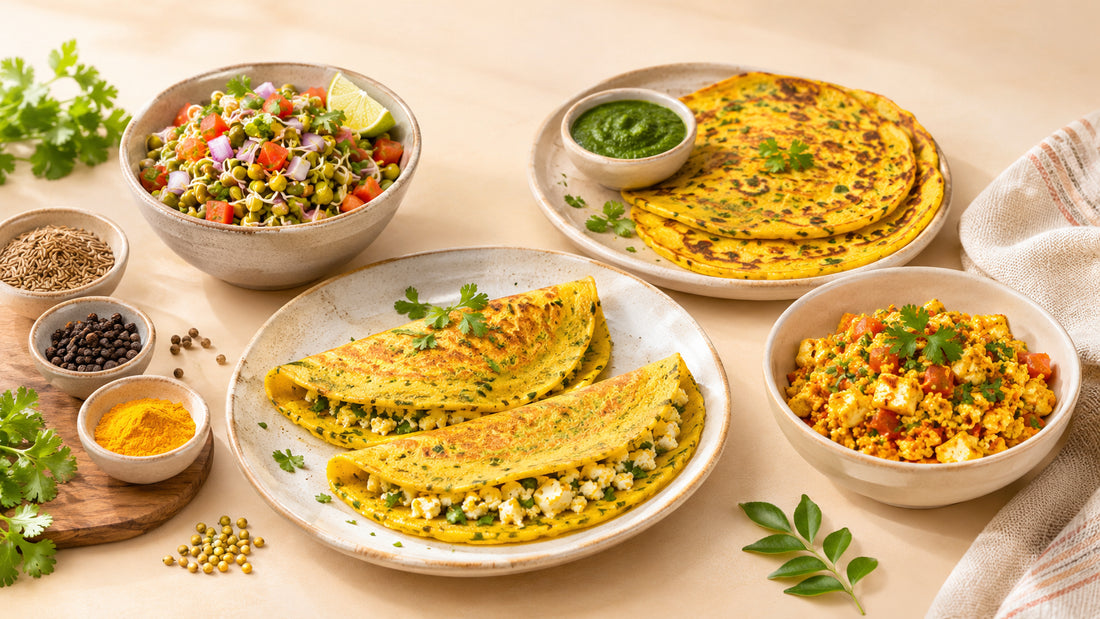
1. Soya Chunk Bhurji (~24 g)
Soak 40 g dry soya chunks in hot water for 10 minutes, squeeze well and pulse coarsely. Crackle cumin seeds in a teaspoon of oil, add onion and tomato, then a pinch of turmeric powder and red chilli powder. Stir in the soya, finish with garam masala and coriander, and serve with a multigrain roti. At around ₹250 a kilo, that 40 g of soya costs about ₹10.
2. Paneer Bhurji (~21 g)
Crumble 100 g paneer. Sauté onion, capsicum and tomato, add half a teaspoon of pav bhaji masala for a street-style flavour, then fold in the paneer for just two minutes so it stays soft. One slice of multigrain toast on the side.
3. Stuffed Besan Chilla (~19 g)
Whisk 60 g besan with water, ajwain, chopped onion, turmeric powder and a little red chilli powder. Cook two thin chillas and fill them with 30 g grated paneer. Fifteen minutes, one pan.
4. Sprouts Chaat (~15 g)
Toss 150 g mixed moong and kala chana sprouts with onion, tomato, lemon juice, 20 g roasted peanuts and a generous sprinkle of chaat masala. Sprout a batch on Sunday and this takes five minutes on weekdays.
5. Moong Dal Chilla with Curd (~18 g)
Soak 60 g yellow moong dal overnight, then grind it with ginger, green chilli and a pinch of cumin powder. Cook two chillas and serve with 100 g curd.
High-Protein Breakfast for Weight Loss
Protein keeps you full longer than a carb-only plate, which helps if you're cutting calories. For an Indian breakfast for weight loss, pick chillas, sprouts chaat or a hung curd bowl, keep oil to one teaspoon, and let spices carry the flavour instead of butter or extra cheese.
Explore Other Blogs
Healthy Indian Breakfast Ideas|Moong Dal Chilla|Poha|Batata Vada
Disclaimer: The information in this blog is for general informational purposes gathered from various sources. Zoff Foods does not guarantee specific health or nutritional outcomes. Please consult a qualified health professional for personalised dietary advice.
Frequently asked
What are the best high-protein Indian breakfast options?
Soya chunk bhurji, paneer bhurji, egg bhurji, besan chilla, moong dal chilla, pesarattu, sprouts chaat and hung curd bowls are the strongest options. Each delivers about 13–24 g of protein per serving using everyday Indian ingredients.
Which Indian vegetarian breakfast has the most protein?
Soya chunk bhurji leads, at roughly 24 g per serving with 40 g dry soya and one roti, because dry soya chunks contain about 52 g protein per 100 g. Paneer bhurji (21 g) and paneer paratha (21 g) come next.
How can I get 20-30 grams of protein in an Indian breakfast?
Combine one anchor protein with a booster. Examples: three-egg bhurji plus a glass of milk (27 g), stuffed besan chilla plus 200 g curd (25 g), or soya chunk bhurji with a roti (24 g).
What are some quick high-protein Indian breakfasts for busy mornings?
Sattu milk (5 minutes, 16 g), hung curd bowl (5 minutes, 20 g), overnight oats with milk and peanuts (prepared the night before, 16 g) and egg bhurji (10 minutes, 22 g) all fit a rushed weekday.
Is poha or upma a good source of protein?
Not on their own. A plate made with 50 g poha gives only about 3-5 g of protein, and plain upma is similar. Add peanuts, sprouts or soya granules and serve curd on the side to reach 14-20 g.
What are affordable protein-rich Indian breakfast recipes?
Soya chunk bhurji, besan chilla, sprouts chaat, kala chana chaat, sattu milk and egg bhurji are the most budget-friendly. Soya chunks, besan, whole moong and kala chana cost far less per gram of protein than paneer or packaged protein foods.