






You usually hear jeera before you smell it. A spoonful hits hot ghee, crackles for a few seconds, and then the dal goes in. That tadka happens in millions of Indian kitchens every day, yet few of us stop to ask what cumin actually adds beyond flavour.
This guide covers what jeera contains, what research does and does not support, how jeera water fits in, and when to reach for whole seeds versus powder.
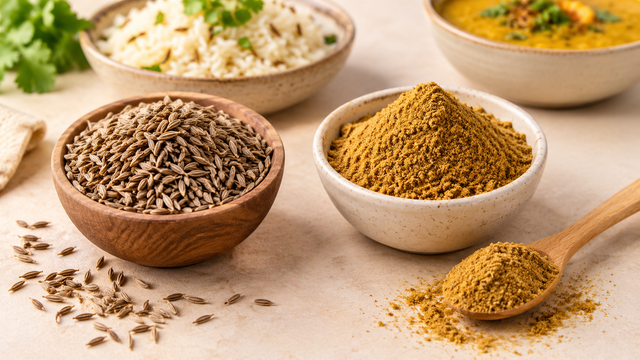
Jeera, also known as cumin seeds (Cuminum cyminum), is an aromatic spice used across Indian cooking. It contains compounds such as cuminaldehyde, along with minerals like iron. Cumin is traditionally linked to digestive comfort, though clinical evidence for many claims remains limited. Whole seeds suit tempering; cumin powder flavours curries, gravies and spice blends.
Nutritional Value of Cumin Seeds
Cumin is nutrient-dense by weight, but we eat it in small amounts. The serving size matters more than the per-100 g figure.
|
Nutrient |
1 tsp whole (~2.1 g) |
1 tbsp whole (~6 g) |
Per 100 g |
|---|---|---|---|
|
Energy |
8 kcal |
22.5 kcal |
375 kcal |
|
Protein |
0.4 g |
1.1 g |
17.8 g |
|
Fat |
0.5 g |
1.3 g |
22.3 g |
|
Carbohydrate |
0.9 g |
2.7 g |
44.2 g |
|
Dietary fibre |
0.2 g |
0.6 g |
10.5 g |
|
Iron |
1.4 mg |
4.0 mg |
66.4 mg |
|
Calcium |
19.6 mg |
55.9 mg |
931 mg |
|
Magnesium |
7.7 mg |
22 mg |
366 mg |
A teaspoon gives about 1.4 mg iron, roughly 8% of an adult's 18 mg daily value. In a real kitchen, though, that teaspoon is usually shared across a pot of dal for four, so each plate gets far less. Cumin's iron is also non-haem, which the body absorbs less efficiently than iron from meat. Treat jeera as a helpful contributor, not an iron source.
Potential Health Benefits
1. Digestive comfort. Ayurvedic and Unani traditions have long used jeera after heavy meals for gas and bloating. Modern evidence is early but interesting. A 2013 case series of 57 people with irritable bowel syndrome reported improvements in pain and bloating after taking cumin extract. It had no placebo group, so it signals potential rather than proof.
2. Weight and metabolic markers. A 2014 trial gave 88 overweight women 3 g of cumin powder with yogurt daily for three months. Alongside a calorie-controlled diet, the cumin group showed greater reductions in weight, waist size and body fat than the control group. A separate 8-week study in 2015 found similar weight changes with cumin and with a weight-loss drug. These were small, short trials, and diet was part of the picture. They do not show that jeera alone causes weight loss.
3. Antioxidant and antimicrobial compounds. Cuminaldehyde and other volatile oils have shown antioxidant and antibacterial activity in laboratory studies. Lab results rarely translate directly to what a pinch of spice does in the body.
The honest summary: jeera adds flavour, small amounts of minerals and some promising compounds. It works best as part of a balanced diet, not as a remedy.
Jeera Water: Preparation and Limits
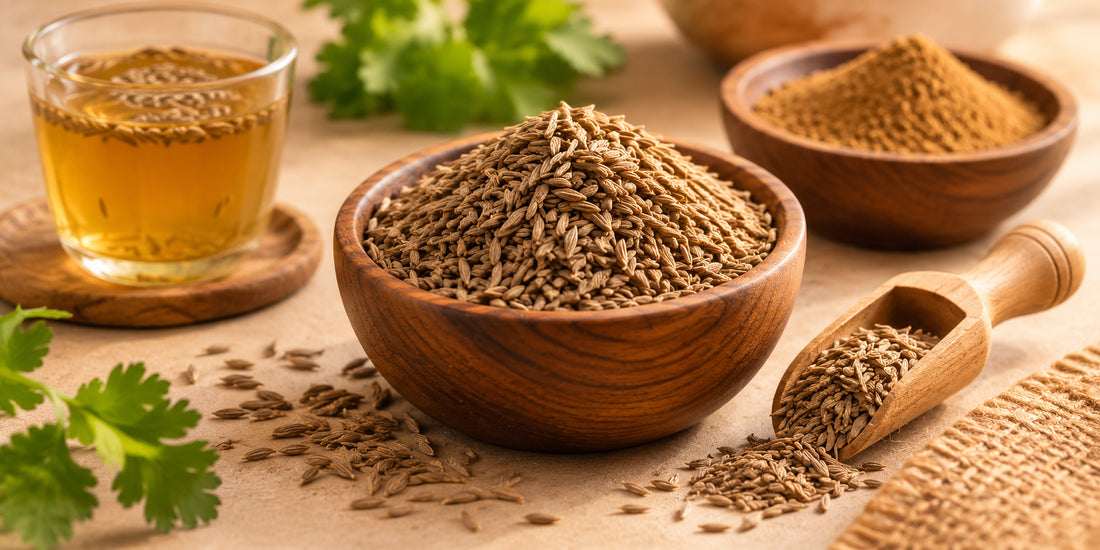
Jeera water is a common morning ritual in many Indian homes. To make it:
- Add 1 tsp whole cumin seeds to 250 ml water.
- Either soak overnight, or boil for 5–7 minutes.
- Strain and drink warm.
People traditionally drink it for digestive ease or as a light, caffeine-free start to the day. There are no robust clinical trials on jeera water itself. Any weight change people notice is more likely from swapping sweetened drinks for a zero-calorie one. If you enjoy it, it is a pleasant habit. It is not a fat-burner or a treatment for digestive conditions.
Cumin Seeds in Indian Cooking
The simplest way to use jeera well is a three-stage framework: start, build, finish.
- Start (whole seeds in tadka): Heat ghee or oil, add jeera and let it splutter for 20–30 seconds until a shade darker. This base anchors moong dal, aloo jeera and most dry sabzis.
- Build (powder in the masala): Add cumin powder with coriander and turmeric once onions and tomatoes soften, for curries and gravies.
- Finish (roasted powder on top): Dry-roast seeds, crush them and sprinkle over raita, chaas or chaat.
Jeera also appears in rice dishes like jeera rice and lemon rice, and in blends such as garam masala, sambar powder and chaat masala.
Whole Jeera vs Jeera Powder: Which Should You Use?
|
Factor |
Whole jeera |
Jeera powder |
|---|---|---|
|
Flavour |
Nutty and toasty once tempered |
Warm, earthy, evenly spread |
|
Freshness |
Holds aroma longer |
Loses volatile oils faster after opening |
|
Best for |
Tadka, rice, pulao, pickles |
Curries, gravies, marinades, raita |
|
When to add |
At the start, in hot fat |
With the masala or at the end |
Keep both. Whole seeds give texture and that tempered aroma; powder disperses quickly where you want flavour in every bite. Store each airtight, away from heat and light.
Safety Considerations
Jeera in normal cooking amounts is considered safe for most people. Concentrated cumin supplements and extracts are different: they have less safety data, and some studies suggest they may affect blood sugar and blood clotting. If you take diabetes or blood-thinning medication, are pregnant, or have surgery coming up, speak to your doctor before using cumin supplements. Large amounts may cause heartburn or burping in some people. And no spice replaces medical care for persistent digestive symptoms.
For more on how spices fit into everyday wellness, read our guide to spices for digestion.
Explore Other Blogs
Indian Spices Benefits|Coriander Powder Benefits|Chaat Masala Benefits|Star Anise Benefits|Cinnamon Benefits
Disclaimer: The information in this blog is for general informational purposes gathered from various sources. Zoff Foods does not guarantee specific health or nutritional outcomes. Please consult a qualified health professional for personalised dietary advice.

Frequently asked
What are the main health benefits of cumin seeds?
Cumin seeds are traditionally used for digestive comfort and contain iron, fibre and antioxidant compounds such as cuminaldehyde. Small clinical studies suggest possible benefits for bloating and metabolic markers, but the evidence is limited. Jeera is best seen as a flavourful, nutrient-dense spice within a balanced diet.
Is jeera good for digestion and bloating?
Jeera has a long traditional use for gas and bloating, and a 2013 case series in people with IBS reported symptom improvement with cumin extract. That study had no placebo group, so evidence remains preliminary. Using jeera in everyday cooking is safe and may support digestive comfort for some people.
What happens if you consume jeera every day?
Eating jeera daily in normal cooking amounts is safe for most people and adds flavour plus small amounts of iron, fibre and minerals. Daily use will not cure conditions or cause weight loss on its own. Concentrated supplements are different and should be discussed with a doctor.
What are the nutritional properties of cumin seeds?
One teaspoon (about 2.1 g) of whole cumin seeds provides roughly 8 kcal, 1.4 mg iron, 0.2 g fibre and 19.6 mg calcium, according to USDA data. Per 100 g, cumin contains 375 kcal, 17.8 g protein and 10.5 g fibre.
Is drinking jeera water beneficial for health?
Jeera water is a traditional, caffeine-free drink often taken for digestive ease. There are no robust clinical trials on jeera water itself. It can be a healthy swap for sugary drinks, but it is not a fat-burner or a treatment for digestive conditions.
What is the difference between whole cumin seeds and cumin powder?
Whole cumin seeds hold their aroma longer and release a nutty flavour when tempered in hot oil, making them ideal for tadka and rice. Cumin powder disperses evenly and suits curries, gravies, marinades and raita, but loses aroma faster once opened.
How should cumin seeds be used in everyday Indian cooking?
Use a simple start-build-finish approach: temper whole jeera in hot ghee for dal and sabzi, add cumin powder with the masala for curries, and sprinkle roasted jeera powder over raita, chaas or chaat to finish.
Are there any side effects of consuming too much jeera?
Cooking amounts are considered safe. Large quantities may cause heartburn or burping in some people. Concentrated cumin supplements may affect blood sugar and clotting, so people on diabetes or blood-thinning medication, pregnant women and anyone facing surgery should consult a doctor first.